Sunday, May 10News That Matters

Breaking News

Experts Suggest Multi-Pronged Fix as Delhi Set to Overhaul Outdated Drainage Network

Experts Suggest Multi-Pronged Fix as Delhi Set to Overhaul Outdated Drainage Network

Breaking News
As Delhi finalizes its ambitious drainage masterplan, experts and urban planners have proposed a series of targeted suggestions to ensure the capital’s new system is future-ready and climate-resilient. With the existing network designed in 1976 and capable of handling only 50 mm of rainfall per day, the city has repeatedly found itself grappling with severe waterlogging and urban flooding during monsoons. One of the key recommendations is to design the new system based on modern rainfall projections, taking into account the growing frequency of extreme weather events. Planners suggest incorporating climate-responsive infrastructure capable of managing 100 mm or more rainfall in a single day. Experts have also called for the integration of real-time monitoring systems using IoT sensor...
Europe Speeds Up River Barrier Removal Drive Aiming for 25,000 km Free Flowing Rivers by 2030

Europe Speeds Up River Barrier Removal Drive Aiming for 25,000 km Free Flowing Rivers by 2030

Breaking News
In a landmark push to revive its freshwater ecosystems, Europe is dismantling river barriers at a record pace. According to the latest figures from Dam Removal Europe (DRE), 542 river barriers were removed across 23 countries in 2024 alone the highest annual tally since the continent-wide initiative began in 2020. This river barrier removal campaign is part of Europe’s broader commitment to make 25,000 kilometres of rivers barrier-free by 2030, a target set under the European Union’s Nature Restoration Law, adopted in July 2023. With one dam or obstruction for every kilometre of river, Europe faces an uphill task to restore natural flow and reconnect fragmented aquatic habitats. The surge in removal reflects growing global recognition of the ecological toll of river fragmentation. Th...
UN Warns Floods Could Unleash Toxic Legacy Chemicals, Threatening Health & Ecosystems

UN Warns Floods Could Unleash Toxic Legacy Chemicals, Threatening Health & Ecosystems

Breaking News
A new report by the United Nations Environment Programme (UNEP) has sounded the alarm on a hidden threat exacerbated by climate change legacy toxic chemicals buried in river and coastal sediments that could resurface during floods, endangering public health and the environment. Titled Frontiers 2025: The Weight of Time, the report highlights how intensifying floods driven by tropical storms and heavier monsoons can mobilize long-banned pollutants from sediments, releasing them into soil, water, and food chains. These legacy pollutants include heavy metals like lead and cadmium, and persistent organic pollutants (POPs) such as obsolete pesticides and synthetic industrial chemicals. These substances, banned decades ago, still persist in riverbeds and estuaries due to their non-biodegradab...
India forests losing carbon despite more green cover: IIT-Kharagpur study warns of climate challenge

India forests losing carbon despite more green cover: IIT-Kharagpur study warns of climate challenge

Breaking News
India’s forests, long considered natural carbon sinks, are losing their ability to absorb carbon dioxide, with photosynthetic efficiency falling by up to 12% in dense forest zones over the past two decades, according to a new study from IIT-Kharagpur. This decline threatens to undermine India’s climate strategy, which relies heavily on afforestation and forest expansion to meet emission reduction goals. The study, led by professor Jayanarayan Kuttippurath at IIT-KGP’s Centre for Ocean, River, Atmosphere, and Land Sciences, found that despite increasing “greenness” in forest areas, actual carbon uptake is weakening. The research reveals that forests in the Western Ghats, Eastern Ghats, and western Himalayas areas known for dense tree cover have seen some of the steepest drops in photosyn...
Flesh-eating parasite prompts US livestock import ban as screwworm threat resurfaces

Flesh-eating parasite prompts US livestock import ban as screwworm threat resurfaces

Breaking News
The United States has shut its southern border to livestock imports amid rising alarm over the spread of the New World screwworm fly in Mexico a flesh-eating parasite that once devastated American agriculture and is now inching closer to Texas. The parasite, notorious for its larvae that infest and consume the flesh of warm-blooded animals, has re-emerged in northern Mexico. Although Mexican authorities argue that the situation is under control with confirmed infestations down 19% since late June U.S. officials remain wary of the potential economic fallout should the screwworm cross into American livestock regions. To counter the threat, the U.S. Department of Agriculture has allocated $30 million to intensify efforts to breed and release sterile male screwworm flies. This well-estab...
Mediterranean marine heatwave shocks scientists with 8°C surge a once-in-a-billion event

Mediterranean marine heatwave shocks scientists with 8°C surge a once-in-a-billion event

Breaking News
An unprecedented marine heatwave in the Mediterranean Sea is alarming climate scientists, with parts of the sea currently experiencing sea surface temperatures up to 8°C above normal a spike so extreme that experts describe it as a once-in-a-billion climatological event. The phenomenon, triggered by a persistent heat dome, is being directly linked to the accelerating effects of human-induced climate change. This marine heatwave, unfolding at the very start of Europe’s summer, has already set record-breaking anomalies, with the Balearic and Tyrrhenian Seas among the worst-affected zones. According to climatologists, the overall sea surface temperature deviations have reached six standard deviations above average, a rarity that signals extreme and highly unusual warming conditions. Hea...
Melting ice may revive ancient microbes and superbugs, warns UN Frontier report

Melting ice may revive ancient microbes and superbugs, warns UN Frontier report

Breaking News
As global temperatures climb the Earth frozen regions are rapidly thawing and with them a Pandora box of microbial dangers is beginning to open. The United Nations Environment Programme (UNEP), in its Frontiers 2025: The Weight of Time report released on July 10 has warned that retreating glaciers and melting permafrost are reactivating ancient microorganisms and releasing antimicrobial resistance (AMR) genes, posing new threats to ecosystems and human health. The report highlights how the cryosphere which includes glaciers, permafrost, sea ice, and frozen ground is at the frontline of the climate crisis. It spans over half the planet’s land surface and supports vital freshwater supplies for hundreds of millions of people. But with Arctic sea ice shrinking rapidly and glaciers projected...
UN report warns floods could unleash toxic legacy chemicals buried in rivers and coasts

UN report warns floods could unleash toxic legacy chemicals buried in rivers and coasts

Breaking News
The United Nations Environment Programme (UNEP) has raised serious concerns about the hidden threat of toxic chemicals resurfacing during floods, in its latest Frontiers 2025: The Weight of Time report. The report highlights how rising river and coastal flooding can disturb long-buried pollutants in sediments posing renewed health and ecological risks worldwide. These “legacy chemicals” include heavy metals such as lead and cadmium along with persistent organic pollutants (POPs) like banned pesticides and industrial by-products. Despite regulations and bans in place for decades, these substances remain lodged in riverbeds, lakes, estuaries, and coastal zones refusing to degrade and continuing to accumulate. During flood events, these pollutants can be resuspended and transported across ...
Byrnihat overtakes Delhi as India most polluted city in 2025

Byrnihat overtakes Delhi as India most polluted city in 2025

Breaking News
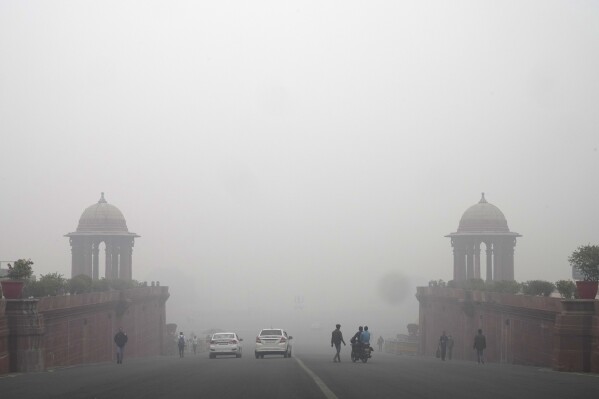
Byrnihat a small industrial town on the Assam-Meghalaya border, has recorded the highest air pollution levels in India during the first half of 2025, according to a new analysis by the Centre for Research on Energy and Clean Air (CREA). With PM2.5 concentrations averaging 133 micrograms per cubic meter, Byrnihat has overtaken Delhi, which recorded 87 µg/m³ in the same period. The spike in pollution levels has drawn national attention, especially since Byrnihat is not traditionally known as an air quality hotspot. CREA attributes the city's toxic air to a combination of unregulated industrial activity, vehicular emissions, and biomass burning. Unlike metropolitan areas that have stricter monitoring and regulatory mechanisms, smaller towns like Byrnihat often lack robust pollution control...
Delhi launches bold push to revive Yamuna with sewage overhaul and fresh funding

Delhi launches bold push to revive Yamuna with sewage overhaul and fresh funding

Breaking News
The Delhi government has unveiled a major initiative to rejuvenate the pollution-choked Yamuna River, announcing plans to nearly double the city’s sewage treatment capacity within two years. The move signals a renewed push by the newly elected administration to tackle one of the capital’s most persistent environmental crises. Led by Water Minister Parvesh Verma, the project includes upgrading 18 of the city’s 37 existing sewage treatment plants, installing new large-scale and decentralized systems, and tightening oversight on key pollution sources like the Najafgarh drain, long identified as a critical hotspot for untreated wastewater discharge. At a high-level meeting chaired by Union Home Minister Amit Shah and Delhi Chief Minister Rekha Gupta, officials outlined a 45-point action ...