Thursday, February 26News That Matters

Breaking News

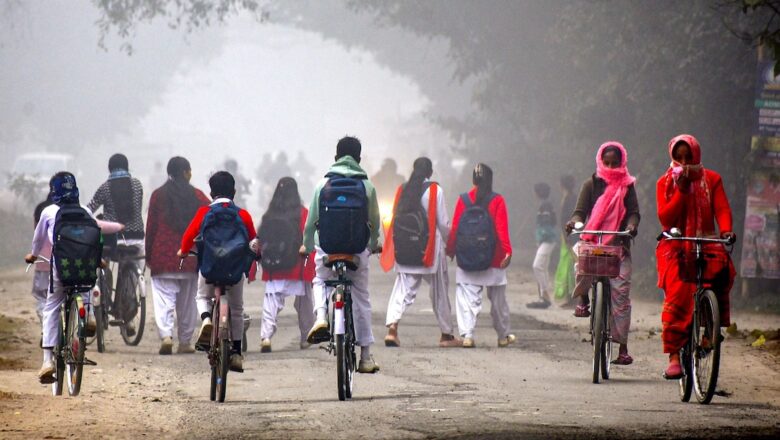
Chilly Morning Likely on Makar Sankranti as Cold Wave and Dense Fog Continue Across North India

Chilly Morning Likely on Makar Sankranti as Cold Wave and Dense Fog Continue Across North India

Breaking News
    As people across India prepare to celebrate Makar Sankranti, the festival will arrive amid persistent cold wave conditions and widespread fog across large parts of northern India, even as meteorologists indicate that winter’s tight grip may begin to loosen gradually after midweek. Traditionally, Makar Sankranti marks the Sun’s northward movement and is associated with the waning of peak winter. This year, however, the seasonal transition is expected to be slow and subtle. Weather experts say that while temperatures may start inching upward after the next couple of nights, cold conditions and reduced visibility due to fog will continue to dominate mornings across the Indo-Gangetic plains. “There will be no major change in overall weather conditions on January 14. F...

Mammoth Bones Kept in a Museum for 70 Years Turn Out to Belong to an Entirely Different Animal

Mammoth Bones Kept in a Museum for 70 Years Turn Out to Belong to an Entirely Different Animal

Breaking News
    Bones once believed to belong to a woolly mammoth and thought they could rewrite the timeline of mammoth extinction have turned out to come from a completely different and unexpected animal. The fossilised remains, consisting of two epiphyseal plates from a large mammal’s spine, were discovered in 1951 by archaeologist Otto Geist during an expedition in Alaska’s interior, just north of Fairbanks. The region, known as Beringia, is famous for yielding fossils of Ice Age megafauna, including mammoths, bison and ancient horses. Given the size of the bones and their location, Geist’s identification of them as woolly mammoth remains seemed reasonable. Late Pleistocene mammoth fossils are common in the region, and the vertebrae were large enough to fit an elephant-sized ...
Tamil Nadu Notifies 100 Forest Blocks as Reserved Forests, Protected Area Expands by 135 Square Kilometres

Tamil Nadu Notifies 100 Forest Blocks as Reserved Forests, Protected Area Expands by 135 Square Kilometres

Breaking News
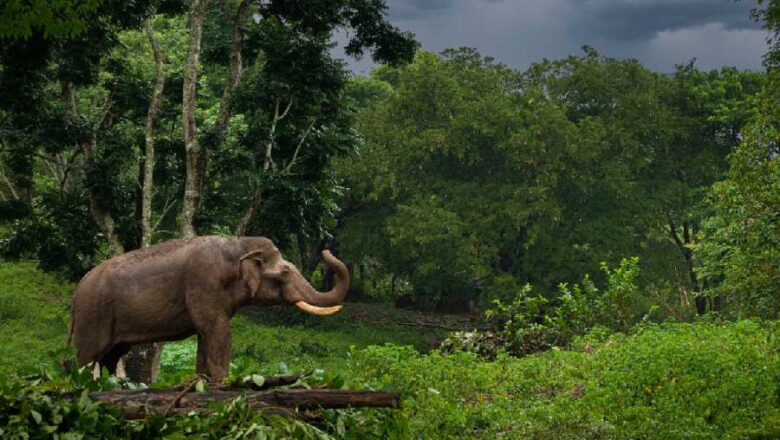
    The Tamil Nadu government has notified 100 forest blocks as Reserved Forests between 2021 and 2025, significantly expanding the state’s legally protected forest area and reinforcing long-term biodiversity conservation and climate resilience efforts. With this move, the total Reserved Forest area in Tamil Nadu has increased by about 135 square kilometres, rising from 26,450 sq km to 26,585 sq km, according to official data released by Forest Minister RS Raja Kannappan. The newly notified forest blocks span 10 districts — Dindigul, Dharmapuri, Madurai, Kallakurichi, Theni, Sivaganga, Namakkal, Nilgiris, Salem and Tenkasi — and together cover nearly 13,495 hectares. Among them, the Highways Forest Block in Theni district, spread over 2,836.33 hectares, is the largest si...
Delhi Wakes Up to Chilly Morning as Air Quality Improves to Poor Category, IGI Airport Issues Advisory

Delhi Wakes Up to Chilly Morning as Air Quality Improves to Poor Category, IGI Airport Issues Advisory

Breaking News
    Delhi experienced another cold morning on Sunday as cold wave conditions continued to affect large parts of north India. The minimum temperature in the national capital dropped to 4.8 degrees Celsius, while moderate fog and a thin layer of smog reduced visibility in several areas, according to the India Meteorological Department. Despite the cold conditions, Delhi’s overall air quality showed improvement and moved into the ‘poor’ category. In view of foggy conditions, the Indira Gandhi International Airport issued an advisory for passengers. The city had recorded its coldest morning of the season a day earlier on Saturday, when the minimum temperature fell to 4.2 degrees Celsius, which was 2.7 degrees Celsius below normal. While temperatures dipped sharply, air quali...
Night Watcher of the Western Ghats: Why Reversing Mythical Beliefs Is Crucial to Saving the Grey Slender Loris

Night Watcher of the Western Ghats: Why Reversing Mythical Beliefs Is Crucial to Saving the Grey Slender Loris

Breaking News
Hidden in the shadows of the Western Ghats forests lives one of India’s most mysterious and misunderstood primates the grey slender loris. Found only in southern India and Sri Lanka, this nocturnal hunter plays a quiet but vital role in forest ecosystems. Yet, despite its ecological importance and unique evolutionary history, the species continues to face serious threats driven largely by harmful myths, habitat loss and human activity. At first mention, the loris is often confused with the wide-eyed lemurs made famous by popular animated films. But unlike those Madagascar natives, the grey slender loris belongs to a different primate lineage altogether. Scientists believe that lemurs and lorises may share a distant common ancestor, a link often cited as evidence supporting the continent...
Hanging by the Cliff: Kashmir Markhor Faces the Risk of Local Extinction in India

Hanging by the Cliff: Kashmir Markhor Faces the Risk of Local Extinction in India

Breaking News
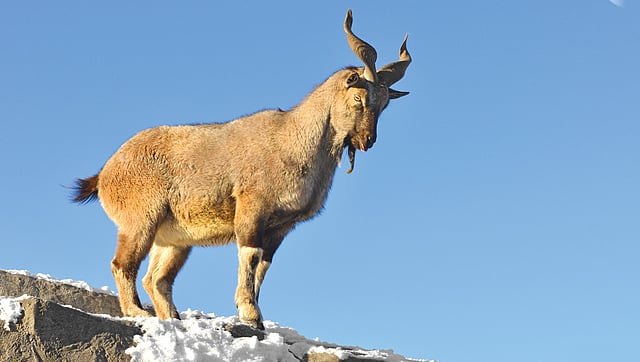
    The Kashmir markhor, one of the world’s largest and most striking wild goats, is facing an alarming risk of local extinction in India as unplanned development, heavy livestock grazing and poaching continue to threaten its fragile habitat in the Himalayas. Once believed to have vanished from the country, the Kashmir markhor was rediscovered during a 2004 statewide survey conducted by the Wildlife Trust of India in collaboration with the Jammu and Kashmir Department of Wildlife Protection and the Nature Conservation Foundation. The survey revealed that only 300 to 350 individuals survived across their historical range, stretching from Banihal Pass in the Pir Panjal to the Shamshabari range north of the Jhelum river. Today, the Kazinag range in Jammu and Kashmir stan...
Climate Change and Human Pressure Are Pushing Parts of the Western Ghats Towards Deciduous Forests

Climate Change and Human Pressure Are Pushing Parts of the Western Ghats Towards Deciduous Forests

Breaking News
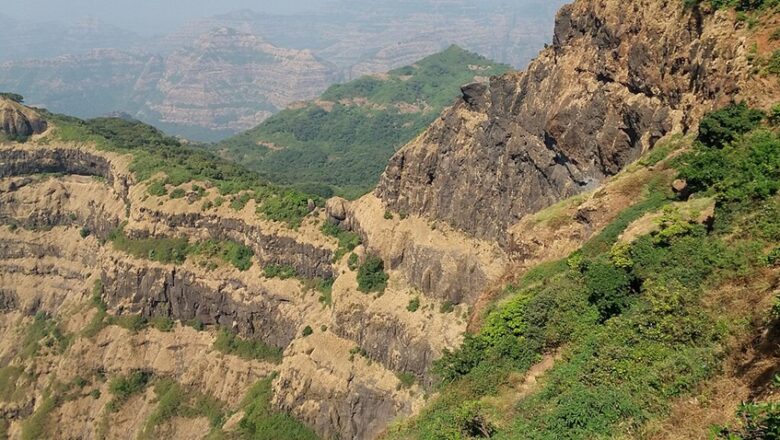
    Climate change combined with sustained human pressure is reshaping forest ecosystems in the northern Western Ghats, with new research showing a clear shift away from evergreen trees towards deciduous species in many low-elevation forests. The study, conducted across parts of Maharashtra, finds that forests facing repeated human disturbance and water stress have lower overall tree diversity, particularly of evergreen species. In contrast, deciduous trees become more dominant in areas where forests are frequently cut or exposed to prolonged dry conditions. Researchers carried out the study as part of a long-term restoration programme aimed at identifying highly threatened yet biodiverse forest patches. Baseline surveys of birds, amphibians and reptiles revealed that...
Can Climate Change and Human Pressure Favour Deciduous Forests in the Western Ghats?

Can Climate Change and Human Pressure Favour Deciduous Forests in the Western Ghats?

Breaking News
    Climate change and sustained human pressure are reshaping forest landscapes across India, and new research from the northern Western Ghats suggests that these forces may be tipping the balance in favour of deciduous forests over evergreen ones, especially at lower elevations. A recent study examining forest composition in the northern Western Ghats finds that areas experiencing high human disturbance and water stress show a marked decline in overall tree diversity, with evergreen species being the most affected. At the same time, deciduous tree species appear to thrive under these altered conditions, increasing in number where disturbance is frequent and prolonged. The research was carried out as part of an on-ground restoration programme in Maharashtra, where sci...
People Inhale Very High Levels of Microplastics Simply by Breathing City Air

People Inhale Very High Levels of Microplastics Simply by Breathing City Air

Breaking News
    People living in cities may be inhaling far higher levels of microplastics than previously understood, simply by breathing the air around them, according to new research from Xi’an, China. Scientists found that airborne microplastic levels in the city tripled over the course of their study, highlighting how everyday pollution and human activity are quietly adding plastic particles to the air people breathe. The study, led by aerosol scientist Fobang Liu of Xi’an Jiaotong University, examined fine air pollution known as PM2.5, tiny particles small enough to penetrate deep into the lungs. By analysing air filters collected in both summer and winter, before and after the COVID-19 pandemic, the researchers were able to track how microplastic concentrations and types chan...
The Mountain Monarch of the Western Ghats Is Returning but Its Future Remains Uncertain

The Mountain Monarch of the Western Ghats Is Returning but Its Future Remains Uncertain

Breaking News
    Few animals are as closely woven into the landscape of the Western Ghats as the Nilgiri tahr. Built for cliffs and grasslands, the sure-footed ungulate has long ruled the high ranges of southern India, shaping both ecosystems and human imagination. Now, after decades of decline, new survey data suggests the species may be slowly emerging from the shadows. Yet conservationists warn that its survival is far from assured. The Nilgiri tahr, found nowhere else in the world, once roamed freely across the shola forests and rolling montane grasslands of the Western Ghats. Its compact, muscular body, curved horns and remarkable balance make it uniquely adapted to steep escarpments and high-altitude meadows. Adult males, known as saddlebacks for the pale patch along their spin...