Thursday, September 17News That Matters

Breaking News

Experts Call For Ecosystem Specific Urban Restoration Over Mass Tree Plantation Drives

Experts Call For Ecosystem Specific Urban Restoration Over Mass Tree Plantation Drives

Breaking News
  Urban restoration efforts should focus on ecosystem specific planning rather than large scale tree plantation drives, according to ecologists who say restoring native landscapes requires long term ecological planning instead of simply increasing the number of saplings planted. The debate has gained attention following Bengaluru's recent plantation drive, in which nearly 1.5 million saplings were planted across 240 acres using the Miyawaki method. While authorities said the initiative aims to reduce urban heat, improve climate resilience and expand green cover, researchers argue that large scale plantation campaigns alone cannot address the complex ecological challenges facing cities. Experts say the widely adopted Miyawaki method, which involves dense planting of native tre...

International Researchers Develop Electrochemical Method to Remove Textile Dyes From Wastewater

International Researchers Develop Electrochemical Method to Remove Textile Dyes From Wastewater

Breaking News
  An international team of researchers has developed a new electrochemical water treatment system capable of removing persistent textile dyes from wastewater, offering a potential solution for cleaner industrial effluent management. The study led by researchers from South Ural State University in collaboration with international scientists, introduces a flow through electrochemical process that generates reactive particles on specially designed electrodes to break down dye molecules without the use of additional chemical reagents. Textile dyes are widely used in the fabric industry due to their strong adhesion to fibres. However, once released into wastewater, these dyes remain highly stable, reduce light penetration in water bodies and pose significant risks to aquatic ecosy...
Microplastics Detected More Frequently in Heart Attack Patients Study Finds

Microplastics Detected More Frequently in Heart Attack Patients Study Finds

Breaking News
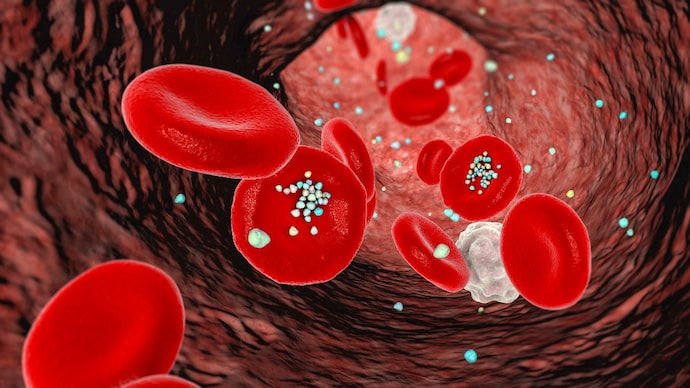
  A new study published in the European Heart Journal has found that people who suffered heart attacks were significantly more likely to have microplastics and nanoplastics in the blood flowing through their coronary arteries, adding to growing evidence that plastic exposure may be linked to cardiovascular disease. Researchers analysed blood samples from 61 patients undergoing coronary examinations, including individuals receiving emergency treatment for heart attacks, patients with chronic coronary artery disease and people with normal coronary arteries. The study found that 84% of heart attack patients had detectable plastic particles in their coronary blood, compared with 40% of patients with chronic coronary disease and 32% of those with healthy arteries. Heart attack pat...
Ken River Ecological Importance Comes under Focus Amid Ken Betwa Project Debate

Ken River Ecological Importance Comes under Focus Amid Ken Betwa Project Debate

Breaking News
  The Ken River, one of central India’s last major free flowing rivers, has become the centre of a growing debate as work progresses on the Rs 44,605 crore Ken Betwa Link Project India’s first major river interlinking initiative. Stretching 427 kilometres from the Kaimur Hills in Madhya Pradesh to its confluence with the Yamuna in Uttar Pradesh, the river flows through the Panna Biosphere Reserve and supports a wide range of wildlife, including tigers, leopards, sloth bears, gharials, mugger crocodiles and more than 110 freshwater fish species. Scientific assessments by institutions including the Wildlife Institute of India and the National Centre for River Research have indicated that the proposed Daudhan Dam reservoir could submerge around 258 square kilometres of habitat w...
81% of Sulphuric Dioxide Around Delhi comes from Coal Plants Exempted from Pollution Rules: CREA

81% of Sulphuric Dioxide Around Delhi comes from Coal Plants Exempted from Pollution Rules: CREA

Breaking News
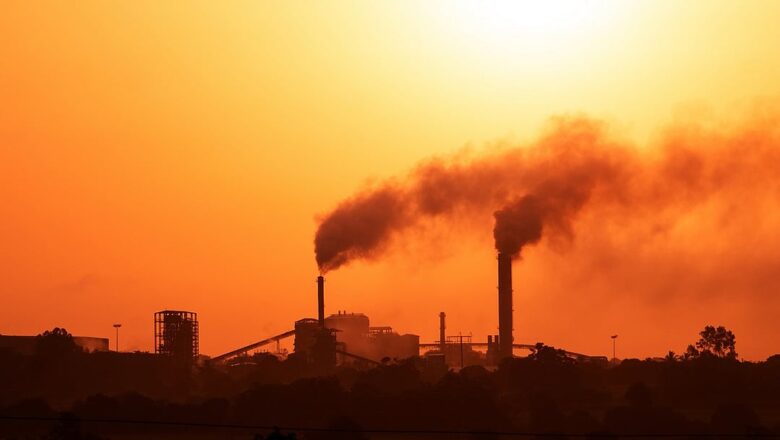
  New Delhi: Nearly 81% of sulphur dioxide (SO₂) emissions from coal fired power plants within a 300-kilometre radius of Delhi NCR originate from plants that are no longer required to install pollution control systems, according to a new analysis by the Centre for Research on Energy and Clean Air (CREA). The findings come one year after the Union Ministry of Environment, Forest and Climate Change relaxed emission norms for most coal fired power plants, exempting 78% of India's coal plants from installing flue gas desulphurisation (FGD) systems, which can reduce SO₂ emissions by up to 95%. CREA analysed 12 coal-fired power plants comprising 37 generating units around Delhi-NCR. Based on publicly available data from 25 units, the study estimates that these plants will emit arou...
Thawing Arctic Permafrost is Destroying Earth’s Ancient Biological Archive Scientists Warn

Thawing Arctic Permafrost is Destroying Earth’s Ancient Biological Archive Scientists Warn

Breaking News
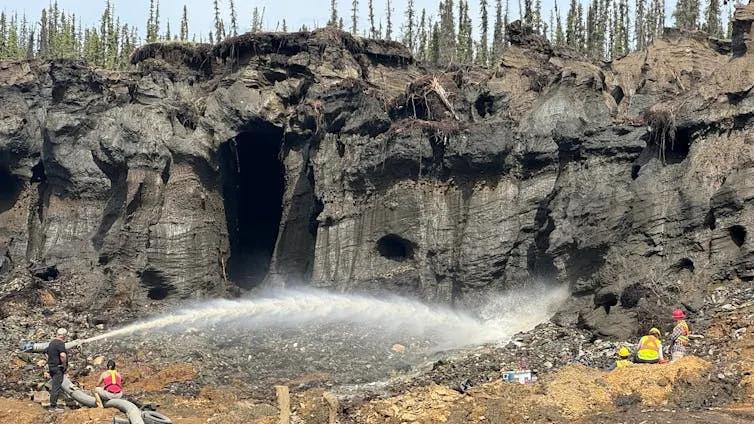
  New Delhi: Climate change is not only damaging Arctic infrastructure and accelerating greenhouse gas emissions but also erasing one of Earth's most valuable archives of ancient life, according to a new study published in Nature Communications. Researchers say Arctic permafrost preserves an extraordinary record of past ecosystems, containing ancient DNA, RNA, proteins and other biological material that has remained frozen for thousands to hundreds of thousands of years. However, rising temperatures are causing these frozen records to degrade before they can be fully studied. The study conducted in Canada Yukon region, recovered DNA from Arctic ground squirrel droppings preserved in permafrost dating from about 14,000 to 700,000 years ago. The samples revealed the plants the ...
Chemical Treatment Cuts Emissions from Producing Hydrogen Using Plastic Waste: Study

Chemical Treatment Cuts Emissions from Producing Hydrogen Using Plastic Waste: Study

Breaking News
  New Delhi: Researchers have developed a chemical process that produces hydrogen from plastic waste with less than half the carbon dioxide emissions of conventional industrial hydrogen production, offering a potential alternative for tackling plastic pollution and reducing emissions from hydrogen manufacturing. The study, published in the Proceedings of the National Academy of Sciences (PNAS) was led by researchers from Ewha Womans University in South Korea. The process uses a sodium hydroxide pretreatment that allows plastics to release hydrogen at around 350°C, significantly lower than the temperatures above 700°C required by previous methods. The lower operating temperature reduces energy consumption while also cutting greenhouse gas emissions. The researchers reported...
Is Nigeria on Track? Evaluating Disaster Risk Reduction Progress Under the Sendai Framework

Is Nigeria on Track? Evaluating Disaster Risk Reduction Progress Under the Sendai Framework

Breaking News
  A new analysis assesses Nigeria progress in implementing the Sendai Framework for Disaster Risk Reduction (2015–2030), highlighting advances in disaster risk management while identifying major gaps in governance, preparedness, investment and risk assessment. The report notes that Nigeria remains highly vulnerable to disasters, particularly floods, which continue to affect communities across the country. The devastating 2022 floods, which impacted 34 states, claimed more than 600 lives, displaced 1.4 million people and caused an estimated N4.2 trillion in economic losses, underscored weaknesses in disaster preparedness and risk governance. According to the analysis Nigeria has improved hazard monitoring through seasonal forecasts, flood mapping and forecasting tools develope...
Why Climate Scientists Need to Talk More About the Very Worst Case Scenarios

Why Climate Scientists Need to Talk More About the Very Worst Case Scenarios

Breaking News
Climate scientists should communicate potential worst case climate change scenarios more clearly to improve public understanding and strengthen action against future risks. The article argues that while catastrophic outcomes such as major ice sheet collapse, extreme sea level rise, widespread flooding, food system failures and deadly heatwaves are not the most likely future, they remain scientifically plausible if greenhouse gas emissions continue unchecked. The author says these possibilities are often under communicated because scientists have traditionally focused on the most probable outcomes rather than low probability, high impact risks. Using the hypothetical example of London becoming permanently uninhabitable due to the collapse of the Greenland and West Antarctic ice sheets...
Warming Can Pushing Southeast Asia’s Forests to Thermal Limits by 2050: Study

Warming Can Pushing Southeast Asia’s Forests to Thermal Limits by 2050: Study

Breaking News
  New Delhi: Tropical forests across Southeast Asia could face unprecedented heat stress within the next three decades as climate change and forest degradation weaken the natural cooling effect of forest canopies, according to a new study published in Geophysical Research Letters. The research warns that rising temperatures beneath forest canopies could expose countless plants, animals and fungi to conditions beyond their thermal tolerance, threatening biodiversity across one of the world's richest ecological regions. Researchers combined temperature measurements from 46 forest sites across Southeast Asia with satellite observations and climate model projections. They found that peak daytime temperatures inside forests could rise by 1.4°C to 2.1°C by 2050, with some lowland r...