Wednesday, February 25News That Matters

Breaking News

Aravalli on the Brink: World Oldest Mountain Range May Lose Vast Forests by 2059

Aravalli on the Brink: World Oldest Mountain Range May Lose Vast Forests by 2059

Breaking News
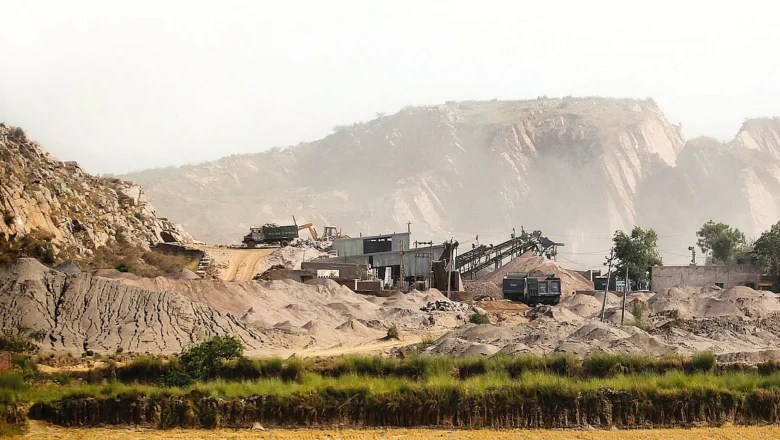
    One of the world’s oldest mountain systems, the Aravalli range, formed more than 2.5 billion years ago, is now facing a future where large parts of it could disappear within a single human lifetime. New scientific projections warn that if current trends continue, over 16,000 square kilometres of forest in the Aravallis could be lost to human settlements by 2059, pushing the ancient range closer to ecological collapse. The warning comes amid growing national attention on the Aravallis, following the Supreme Court’s recent decision to put on hold its November 20 order related to the definition of the hill range. The court has taken suo motu cognisance of concerns that a revised definition could open the door to increased mining and construction in the fragile foothills...

650 Foot Mega Tsunami Shook the Planet for Nine Days and Satellites Finally Explained Why

650 Foot Mega Tsunami Shook the Planet for Nine Days and Satellites Finally Explained Why

Breaking News
    In one of the most extraordinary geophysical events ever recorded, a colossal tsunami in East Greenland sent seismic vibrations rippling through Earth’s crust for nine continuous days. The slow, rhythmic signal puzzled scientists worldwide until satellite imagery revealed the source: a massive mountainside collapse into a remote Arctic fjord. The event unfolded without warning in September 2023. Seismic stations from Alaska to Australia began recording an unusual, steady pulse repeating every 92 seconds. Unlike earthquakes, which produce sharp, short-lived tremors, this signal was smooth, persistent, and globally synchronized. No one felt it but the planet did. Researchers soon traced the disturbance to Dickson Fjord, a narrow inlet along Greenland’s eastern coast...
Plant Leaves Offer New Clues on How Forests React to Rising Carbon Dioxide

Plant Leaves Offer New Clues on How Forests React to Rising Carbon Dioxide

Breaking News
    As carbon dioxide levels in the atmosphere continue to rise, a long-standing assumption has guided climate thinking: more CO₂ should help forests grow faster, absorb more carbon, and slow global warming. However, real-world forest data collected over decades has repeatedly challenged this idea. Tree growth and long-term carbon storage have shown inconsistent responses, ranging from slight increases to no change and even declines in some regions. A new study led by researchers from Duke University and Wuhan University suggests the answer lies not in carbon alone, but in water. By examining how plant leaves manage the trade-off between absorbing carbon dioxide and conserving water, scientists are gaining a clearer picture of why forests do not always respond predictabl...
Smog Returns to Delhi as Air Quality Slips to ‘Very Poor’  Flight Delays Rise at IGI Airport

Smog Returns to Delhi as Air Quality Slips to ‘Very Poor’ Flight Delays Rise at IGI Airport

Breaking News
    Delhi woke up to a blanket of smog on Saturday as air quality across the national capital region deteriorated sharply, pushing the Air Quality Index back into the ‘very poor’ category and disrupting daily life. After a brief improvement earlier in the week, pollution levels began rising again on December 26, with the city recording an AQI of 333, according to official data. By 11:05 am on December 27, the average AQI stood at 359, placing it firmly in the ‘very poor’ range. Several monitoring stations reported even worse conditions, with some slipping into the ‘severe’ category. The primary pollutants driving the decline were fine particulate matter PM2.5 and PM10, which pose serious health risks, especially for children, the elderly and people with respiratory condi...
Microplastics Can Invade Blood Vessels and Rapidly Worsen Heart Disease, New Study Warns

Microplastics Can Invade Blood Vessels and Rapidly Worsen Heart Disease, New Study Warns

Breaking News
    Tiny plastic particles that are now everywhere in daily life may be doing far more damage to the heart than previously believed. A new study from the University of California, Riverside has found that microplastics can burrow into blood vessels and dramatically accelerate the development of heart disease, at least in male mice. The findings suggest that microplastics may actively damage arteries rather than simply being passive contaminants found alongside disease. Microplastics are released from everyday items such as food packaging, synthetic clothing, and disposable plastic products. They have already been detected in human blood, organs, and even inside arterial plaques. Until now, scientists were unsure whether these particles played a direct role in cardiovascu...
Delhi AQI Soars Past 400 as Dense Fog Disrupts Flights Across North India

Delhi AQI Soars Past 400 as Dense Fog Disrupts Flights Across North India

Breaking News
    NEW DELHI: Delhi woke up to a toxic mix of severe air pollution and dense fog on Monday, pushing the city’s Air Quality Index past the 400 mark and severely disrupting flight operations across northern India. The deteriorating conditions prompted the Ministry of Civil Aviation and multiple airlines to issue travel advisories, warning passengers of possible delays and cancellations. According to data from the Central Pollution Control Board (CPCB), Delhi’s AQI stood at 402 at 8 am, placing it firmly in the ‘severe’ category. This marked a sharp decline from Sunday evening, when the AQI was recorded at 390 and classified as ‘very poor’. Several parts of the capital reported even worse conditions, with Anand Vihar registering an alarming AQI of 455, followed by Wazirpur...
Scientists Recover RNA From an Extinct Animal for the First Time, Unlocking Gene Activity of the Tasmanian Tiger

Scientists Recover RNA From an Extinct Animal for the First Time, Unlocking Gene Activity of the Tasmanian Tiger

Breaking News
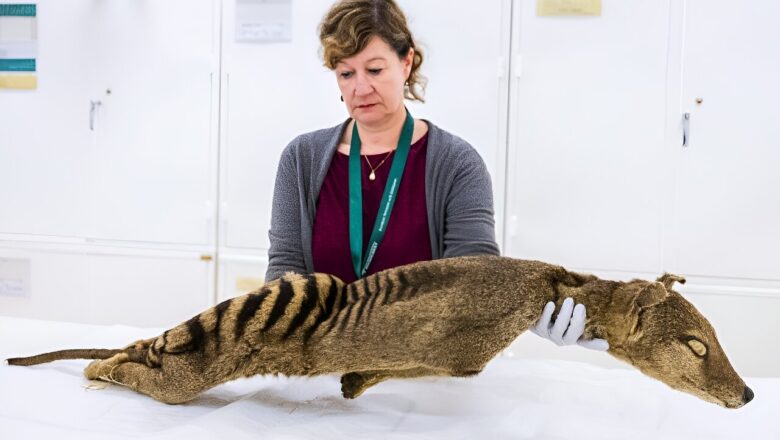
    In a major scientific breakthrough, researchers have successfully recovered RNA from an extinct animal for the first time, allowing them to study which genes were active when the animal was alive. The achievement was made using tissue from the Tasmanian tiger, or thylacine, which went extinct nearly 90 years ago. The research was led by Dr. Marc R. Friedländer of Stockholm University in Sweden and published in the journal Genome Research. The team analysed skin and muscle samples taken from a 130-year-old thylacine specimen preserved in a Swedish museum. The animal had been stored dry at room temperature since the late 19th century, conditions once thought unsuitable for RNA preservation. DNA reveals what genes an organism possesses, but RNA shows how those genes ...
Gujarat Returns to India Tiger Map After 36 Years as NTCA Confirms Presence of Big Cat

Gujarat Returns to India Tiger Map After 36 Years as NTCA Confirms Presence of Big Cat

Breaking News
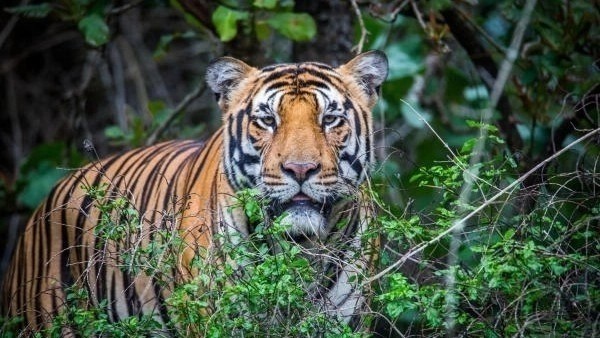
    After more than three decades, Gujarat has officially regained its status as a ‘tiger-present’ state, marking a major milestone in wildlife conservation. The National Tiger Conservation Authority (NTCA) has confirmed the presence of a tiger in the state, Deputy Chief Minister Harsh Sanghavi announced on Friday. With this confirmation, Gujarat has become home to all three major big cats found in India the Asiatic lion, leopard and tiger a rare and significant ecological distinction. According to forest department records, tigers had gone extinct in Gujarat in 1989, nearly 36 years ago. The development follows the Gujarat Forest Department’s announcement last month that a wandering tiger had settled in the Ratanmahal Wildlife Sanctuary in Dahod district. Continuous ...
Giant Prehistoric Sea Monster Discovered After 11-Year-Old Girl Finds Fossil on British Beach

Giant Prehistoric Sea Monster Discovered After 11-Year-Old Girl Finds Fossil on British Beach

Breaking News
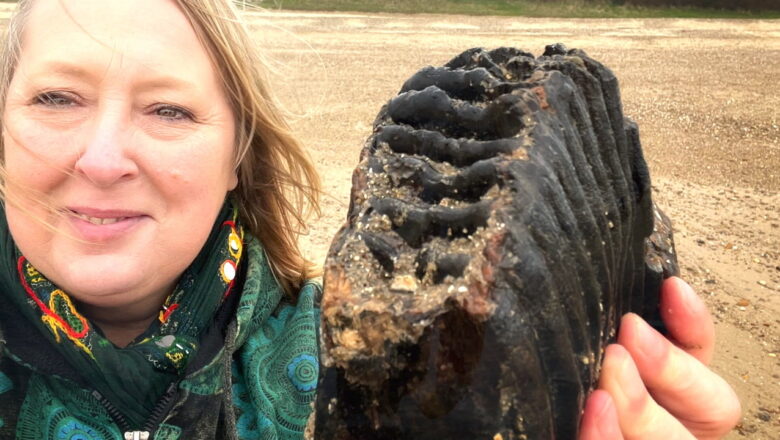
    A remarkable discovery made by an 11-year-old girl during a simple beach walk has led scientists to identify what may be the largest marine reptile ever to have lived on Earth. The finding is now reshaping scientific understanding of prehistoric oceans and the true size of ancient marine predators. The fossil, a massive lower jawbone measuring more than two metres in length, was discovered in 2020 on the coast of Blue Anchor in Somerset, southwest England. The bone was found by schoolgirl Ruby Reynolds and her father while fossil hunting along the shoreline. Scientists later confirmed that it belongs to a previously unknown species of giant ichthyosaur, now named Ichthyotitan severnensis. Researchers determined that the newly identified species lived around 202 mi...
Asia Gentle River Dolphin Is Disappearing: Why the Irrawaddy Dolphin Is on the Brink of Extinction

Asia Gentle River Dolphin Is Disappearing: Why the Irrawaddy Dolphin Is on the Brink of Extinction

Breaking News
    Soft-eyed, smiling, and famously friendly, the Irrawaddy dolphin has long been known as one of the world’s sweetest animals. Found in the rivers and coastal waters of Southeast Asia, this rare dolphin is not just a marine species but a living symbol of harmony between humans and nature. Today, however, it stands at the edge of extinction, with fewer than 100 individuals surviving in several key river systems. For generations, Irrawaddy dolphins have shared a unique bond with fishing communities in countries such as Myanmar, Cambodia, and Indonesia. Along rivers like the Ayeyarwady, fishing begins not with nets, but with trust. Fishermen gently tap their boats, waiting quietly. Soon, the dolphins appear, guiding schools of fish toward the nets. In return, they feed on...