Tuesday, May 5News That Matters

Breaking News

World Amphibian Count Crosses 9,000, but Thousands May Disappear Before Being Named

World Amphibian Count Crosses 9,000, but Thousands May Disappear Before Being Named

Breaking News
    Amphibians, among the most threatened groups of animals on Earth, have officially crossed a major scientific milestone. Researchers have now described more than 9,000 amphibian species worldwide, marking a significant achievement for taxonomy and biodiversity science. The finding comes from a new research paper that tracks global trends in amphibian discovery, while also warning that many species may go extinct before they are ever documented. The study, authored by Sky T Button, Franco Andreone and Amaël Borzée, describes the milestone as the result of decades of sustained research efforts across continents. According to the authors, the number of recognised amphibian species has more than doubled over the last 40 years, reflecting advances in field surveys, genetic...
From Hunters to Protectors: How India Fishers Are Saving the World Largest Fish

From Hunters to Protectors: How India Fishers Are Saving the World Largest Fish

Breaking News
    Once feared, hunted and butchered for oil and meat, whale sharks along India’s western coast are now being freed by the very fishing communities that once targeted them. Across the Arabian Sea coastline, fishers are cutting their own nets to rescue the world’s largest fish, transforming decades of exploitation into one of India’s most striking community-led conservation stories. Over the past two decades, more than a thousand whale sharks have been safely released from fishing nets along India’s west coast, thanks to sustained outreach by the Wildlife Trust of India (WTI) and growing participation from coastal communities. On a calm March morning near Thiruvananthapuram in Kerala, a group of fishers hauling a traditional kambavala net realised they had caught some...
Grazers and Diggers Face Higher Risk From Toxic Soil Elements, New Study Finds

Grazers and Diggers Face Higher Risk From Toxic Soil Elements, New Study Finds

Breaking News
    Some of Africa’s most iconic herbivores may be more exposed to toxic elements in soil than others, not because of what they eat, but because of how and where they feed. New research from South Africa’s Kalahari desert shows that grazing and digging animals ingest significantly more soil than tree-browsing species, increasing their potential exposure to harmful metals such as arsenic, lead and chromium. The study, led by Andrea Webster of the University of Pretoria examined 16 herbivore species at the Tswalu Kalahari Reserve. It highlights how feeding behaviour plays a crucial role in determining wildlife exposure to soil-borne toxins, with important implications for conservation, rewilding and habitat restoration projects. Feeding close to the ground increases exp...
Niagara Falls Nearly Freeze as Minus-55°C Arctic Blast Grips North America

Niagara Falls Nearly Freeze as Minus-55°C Arctic Blast Grips North America

Breaking News, Climate Actions, Environment
    An intense Arctic cold wave has plunged large parts of Canada into dangerously low temperatures, transforming Niagara Falls into a rare and dramatic winter spectacle. With wind chill values dropping close to minus 55 degrees Celsius, one of the world’s most powerful waterfalls now appears almost frozen in time, drawing global attention while raising serious safety concerns. The brutal cold spell has sent shockwaves across North America, with icy air spilling south into the United States. Authorities on both sides of the border have issued warnings as extreme conditions disrupt daily life, infrastructure, and tourism. Visitors arriving at Niagara Falls are met with an otherworldly scene. Thick ice coats railings, trees, and observation decks, while constant mist fr...
Microplastics Found More Concentrated in Rural Air Than Cities, Study Reveals

Microplastics Found More Concentrated in Rural Air Than Cities, Study Reveals

Breaking News
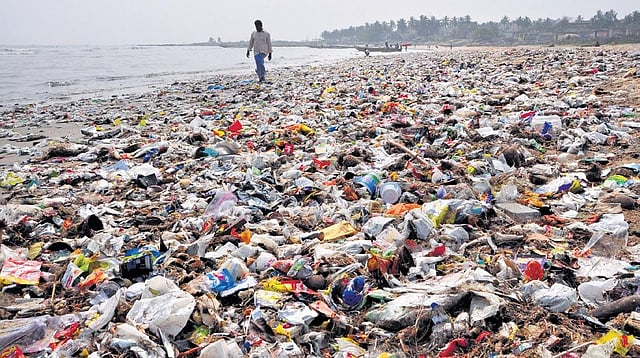
    Microplastic pollution in the air may be more widespread in rural environments than in urban centres, according to a new study by researchers from the University of Leeds. The findings challenge the common assumption that cities are the primary hotspots for airborne plastic contamination. The study found that microscopic plastic particles, invisible to the naked eye, are carried long distances by wind and later trapped by trees and vegetation. Surprisingly, researchers recorded significantly higher levels of airborne microplastics in a rural woodland area compared to a nearby city centre. During a three-month monitoring period, scientists detected up to 500 microplastic particles per square metre per day in a woodland area in Oxfordshire. This was nearly double th...
Caste Reality of Urban Waste Work Exposed as Data Shows 84% Pickers From Marginalised Communities

Caste Reality of Urban Waste Work Exposed as Data Shows 84% Pickers From Marginalised Communities

Breaking News
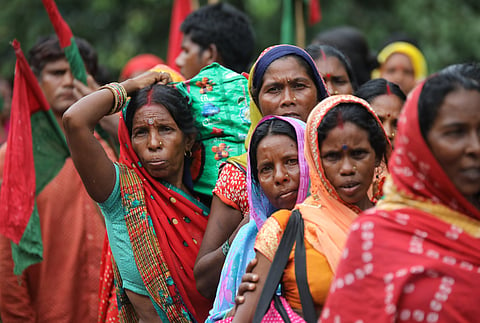
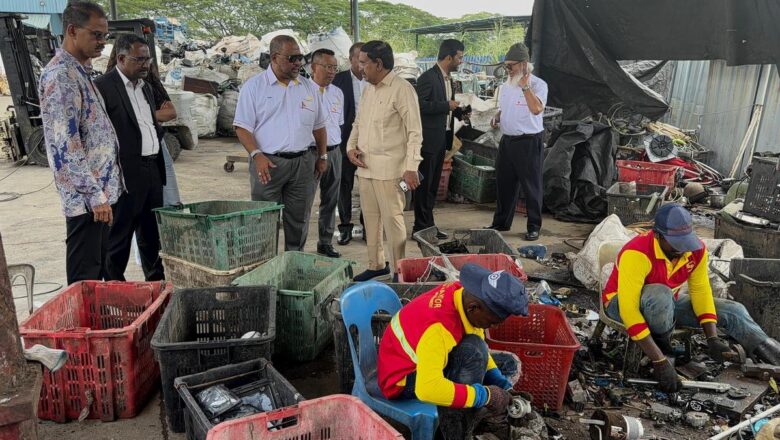
    For the first time, official government data has laid bare the social composition of India’s urban waste-picking workforce, revealing that an overwhelming majority of workers engaged in informal waste collection come from historically marginalised communities. Data tabled in Parliament on February 3, 2026 by the Ministry of Social Justice and Empowerment shows that 84.5 per cent of the 1.52 lakh waste-pickers profiled so far belong to Scheduled Caste, Scheduled Tribe and Other Backward Class communities. Only 10.7 per cent of workers were from the General category, while the rest were classified under “Other” communities. The data is part of the ongoing enumeration exercise under the National Action for Mechanised Sanitation Ecosystem (NAMASTE) scheme, which aims ...
Cotton Mission Stuck on Paper as Budget Silence Raises Questions for Farmers

Cotton Mission Stuck on Paper as Budget Silence Raises Questions for Farmers

Breaking News
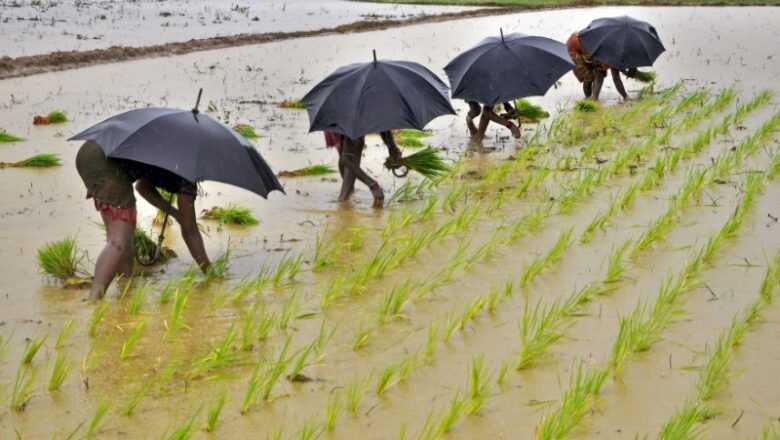
    An ambitious five-year Cotton Productivity Mission announced with much promise in last year’s Union Budget has failed to move beyond official files, raising concerns among farmers and policy watchers about the government’s commitment to reviving India’s struggling cotton sector. Despite being pitched as a transformative initiative aimed at boosting productivity, sustainability and farmer incomes, the mission has not received any fresh allocation in the Union Budget 2026-27, effectively putting its future in doubt. While presenting the Budget for 2025-26, Finance Minister Nirmala Sitharaman had announced the launch of the Cotton Productivity Mission, describing it as a major step in the interest of millions of cotton farmers across the country. The proposed mission...
NGT Directs Delhi Neighbouring States to Restore Native Fish, Curb Invasive Species in Yamuna

NGT Directs Delhi Neighbouring States to Restore Native Fish, Curb Invasive Species in Yamuna

Breaking News
    The National Green Tribunal (NGT) has directed Delhi and four neighbouring states to urgently restore native fish populations in the Yamuna river and take strict measures to control the spread of invasive, non-native species that are rapidly altering the river’s ecosystem. The order, passed on January 29, came after the tribunal took cognisance of a media report highlighting the alarming decline of indigenous fish species and the unchecked rise of exotic varieties in the river. Acting on the findings, the NGT asked Delhi, Uttarakhand, Himachal Pradesh, Haryana and Uttar Pradesh to implement recommendations submitted by the Indian Council of Agricultural Research–Central Inland Fisheries Research Institute (ICAR-CIFRI). The directions are based on a detailed survey...
Delhi Neeli Jheel Moves Closer to Ramsar Recognition, Signalling Revival of Urban Wetlands

Delhi Neeli Jheel Moves Closer to Ramsar Recognition, Signalling Revival of Urban Wetlands

Breaking News
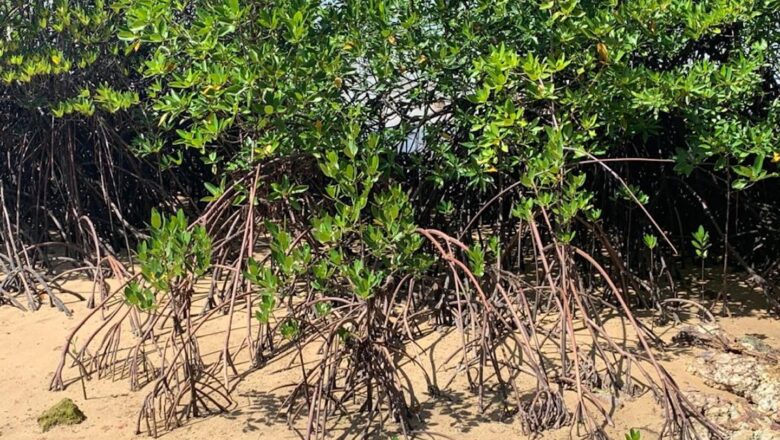
    At a time when Delhi is battling record air pollution and shrinking green spaces, a rare note of environmental optimism has emerged. Neeli Jheel, a striking blue-water lake tucked inside the Asola Bhatti Wildlife Sanctuary, could soon be notified as the capital’s first Ramsar site. The announcement was made on World Wetlands Day 2026, marking a potential milestone for urban wetland conservation in India’s most densely populated city. The 5.16-hectare wetland is being proposed for recognition under the Ramsar Convention, an international treaty aimed at protecting wetlands of global ecological importance. If approved, Neeli Jheel would place Delhi on the global wetland conservation map for the first time. Delhi Environment Minister Manjinder Singh Sirsa said the mo...
Lab-Built Virus Offers New Weapon Against Antibiotic Resistance, Raises Fresh Questions

Lab-Built Virus Offers New Weapon Against Antibiotic Resistance, Raises Fresh Questions

Breaking News
    Scientists have taken a major step toward tackling antibiotic-resistant infections by designing bacteria-killing viruses entirely in the laboratory. The breakthrough could speed up the development of precision treatments against deadly superbugs, at a time when conventional antibiotics are steadily losing their power. Bacteriophages, viruses that infect and kill bacteria, have been known for more than a century. Their medical use, however, has remained limited because engineering them is slow, complex, and heavily dependent on naturally occurring viruses. As drug-resistant infections rise worldwide, researchers have been searching for faster and safer ways to create tailor-made phages. Synthetic DNA Turns Phage Engineering on Its Head In a study published in th...