Wednesday, May 6News That Matters

Breaking News

Pakistan Urges Global Recognition of Water Insecurity as Systemic Risk, Criticises India Over Indus Treaty Suspension

Pakistan Urges Global Recognition of Water Insecurity as Systemic Risk, Criticises India Over Indus Treaty Suspension

Breaking News
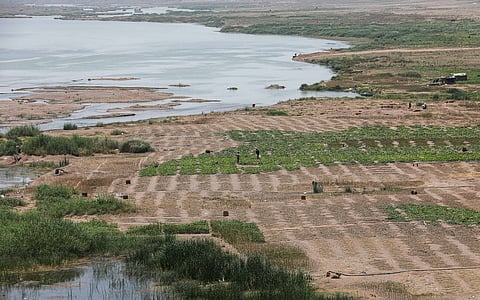
    Pakistan has called on the international community to recognise water insecurity as a systemic global risk, warning that disruptions in shared river basins threaten food security, livelihoods and regional stability. The appeal was made amid rising tensions with India following New Delhi’s unilateral decision to place the Indus Waters Treaty in abeyance. Speaking at a United Nations policy roundtable on global water stress, Pakistan’s Acting Permanent Representative to the UN, Ambassador Usman Jadoon, said water insecurity is no longer a local or regional concern but a global challenge affecting food production, energy systems, public health and human security across regions. “For Pakistan, this is a lived reality,” Jadoon said, describing the country as a climate-...
Replanted Rainforests Struggle to Recover Decades After Logging, Study Finds

Replanted Rainforests Struggle to Recover Decades After Logging, Study Finds

Breaking News
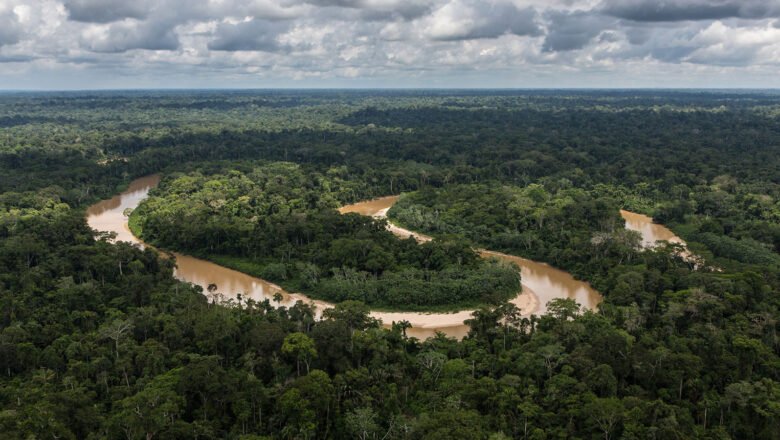
Replanting tropical rainforests after logging may appear to be a straightforward solution to environmental damage, but new scientific research suggests recovery is far more complex and uncertain than previously believed. A long-term study conducted in the rainforests of Malaysian Borneo shows that even decades after logging, replanted forests struggle to support the survival of young trees when compared to untouched natural forests. The research was carried out by scientists from the University of Exeter, ETH Zürich, the Smithsonian Tropical Research Institute, and the United Kingdom Centre for Ecology and Hydrology. Over an 18-month period, the team tracked the survival of 5,119 seedlings across different forest conditions in northern Borneo, including pristine forests, naturally regen...
CSR Is the Missing Fuel Behind India’s Biochar Revolution

CSR Is the Missing Fuel Behind India’s Biochar Revolution

Breaking News
    Every winter in north India, the cycle repeats itself with grim predictability. Crop fields are set on fire, villages disappear under smoke, and children breathe air thick with pollutants. Farmers are often blamed, but the reality is more complex. Stubble burning is not an act of neglect; it is an act of necessity. Clearing fields quickly and cheaply between harvests leaves farmers with few viable alternatives. Agricultural biomass pyrolysis offers a different pathway, one where residue becomes a resource rather than a hazard. Yet, for this alternative to move beyond promise, it needs a central pillar of support: sustained and purposeful corporate social responsibility funding. For small and marginal farmers, time and money are always in short supply. Decisions ar...
How the Movement of Earth’s Surface Shapes Climate More Than Scientists Once Realised

How the Movement of Earth’s Surface Shapes Climate More Than Scientists Once Realised

Breaking News
    Earth’s climate has never been static. Over hundreds of millions of years, the planet has shifted repeatedly between cold “icehouse” phases and much warmer “greenhouse” states. Scientists have long known that atmospheric carbon dioxide plays a central role in driving these swings. What has been less clear is where that carbon comes from and how it moves through Earth’s systems over deep geological time. New research now shows that the movement of Earth’s tectonic plates has had a far greater influence on long-term climate change than previously understood. The study reveals that carbon is not released only where tectonic plates collide, but also where they slowly pull apart, fundamentally reshaping our understanding of Earth’s carbon cycle. Published in the journa...
National Park Created to Protect Sumatran Tigers Is Rapidly Losing Its Forest Cover

National Park Created to Protect Sumatran Tigers Is Rapidly Losing Its Forest Cover

Breaking News
    A national park in Indonesia that was established to safeguard some of the world’s rarest wildlife has lost more than half of its forest in just two decades. New research tracking changes over time shows that the destruction did not happen overnight or through a single dramatic event. Instead, it spread quietly from the edges inward, steadily hollowing out the park’s core. The study focuses on Tesso Nilo National Park in Riau province on the island of Sumatra, a protected area created in 2004 to conserve lowland rainforest and provide habitat for critically endangered Sumatran tigers and elephants. Despite its legal status, satellite images and field observations reveal that forest loss has continued almost uninterrupted, raising serious concerns about how protected ...
Narmada River Flows Westward Against India Eastward River Pattern, Explained by Ancient Geology

Narmada River Flows Westward Against India Eastward River Pattern, Explained by Ancient Geology

Breaking News
    Most Indian rivers follow a familiar eastward route, flowing toward the Bay of Bengal from the Himalayas or central highlands. The Narmada River stands out as a rare exception. Flowing westward across the subcontinent, it challenges long-held geography lessons and highlights how ancient land formations continue to shape India’s natural systems. Often described as a river that flows “backwards,” the Narmada simply follows the natural slope of the land. Stretching about 1,310 kilometres, it is India’s fifth-longest river and one of the very few major rivers, along with the Tapi, that empties into the Arabian Sea instead of the Bay of Bengal. Geological forces that shaped the Narmada’s westward journey The Narmada originates at Amarkantak in Madhya Pradesh, a fore...
Pakistan Urges Global Recognition of Water Insecurity as Systemic Risk, Criticises India Over Indus Treaty Suspension

Pakistan Urges Global Recognition of Water Insecurity as Systemic Risk, Criticises India Over Indus Treaty Suspension

Breaking News
    Pakistan has called on the international community to recognise water insecurity as a systemic global risk, warning that disruptions in shared river basins threaten food security, livelihoods and regional stability. The appeal was made amid rising tensions with India following New Delhi’s unilateral decision to place the Indus Waters Treaty in abeyance. Speaking at a United Nations policy roundtable on global water stress, Pakistan’s Acting Permanent Representative to the UN, Ambassador Usman Jadoon, said water insecurity is no longer a local or regional concern but a global challenge affecting food production, energy systems, public health and human security across regions. “For Pakistan, this is a lived reality,” Jadoon said, describing the country as a climate-...
More Floods Are Coming and Research Shows What Actually Helps People Prepare

More Floods Are Coming and Research Shows What Actually Helps People Prepare

Breaking News
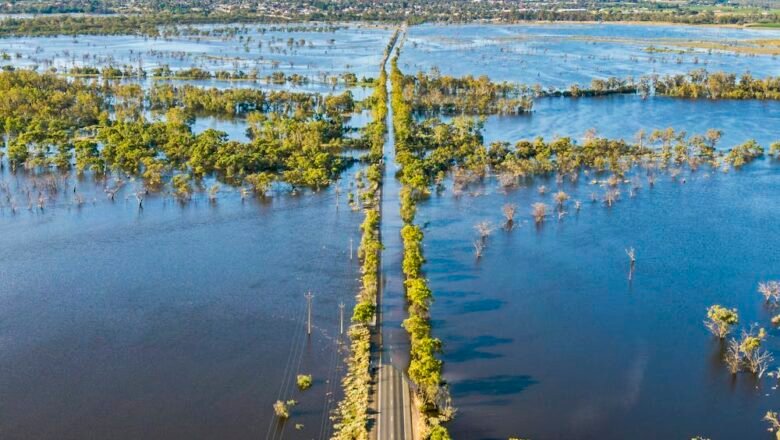
    Severe storms and flooding are becoming more frequent, and recent events in Australia show just how unprepared many people still are. In New South Wales alone, the State Emergency Service responded to more than 1,600 incidents after weekend storms, while flash floods in Victoria last week swept cars into the sea and forced people to flee with little warning. Even residents who had lived in these areas for years were caught off guard, highlighting the limits of current flood preparedness strategies. For decades, governments and risk agencies have relied on top-down approaches to prepare communities for floods. These methods usually involve warnings, advertisements and public information campaigns that tell people what to do and expect them to act accordingly. Despite ...
Amid Hunger and Poor Nutrition, India Food Waste Is Feeding a Dangerous Climate Loop

Amid Hunger and Poor Nutrition, India Food Waste Is Feeding a Dangerous Climate Loop

Breaking News
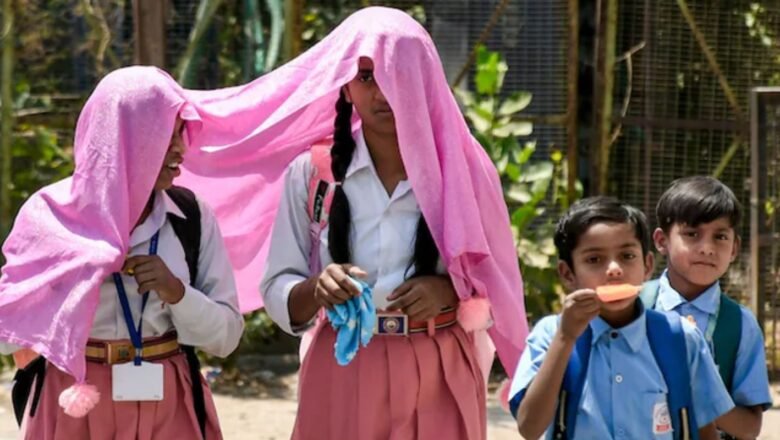
    India is facing a deep contradiction. Millions of people struggle with hunger and poor nutrition, yet enormous quantities of food are wasted every year. This waste is not only an economic failure but also a serious climate problem, creating a vicious cycle where climate disasters cause food loss, and rotting food further worsens climate change. While global leaders recently met at COP30 to discuss climate action, the effects of climate change were already unfolding on the ground in India. An intense and unusually early heatwave scorched large parts of the country, while unprecedented floods in Punjab, India’s key food-producing region, submerged farmland and destroyed crops. These extreme weather events directly reduced food availability and damaged farmer livelihood...
Sacred Groves in the Northern Western Ghats Face the Highest Human Pressure Despite Their Ecological Importance

Sacred Groves in the Northern Western Ghats Face the Highest Human Pressure Despite Their Ecological Importance

Breaking News
    Sacred groves in India’s northern Western Ghats are experiencing the highest levels of human disturbance among all forest protection regimes, according to a new scientific study. The findings highlight a growing paradox: forest patches that have traditionally survived through cultural protection are now among the most pressured, even as they continue to play a crucial role in conserving biodiversity. Sacred groves are community-protected forest patches linked to religious beliefs and nature worship. For generations, social taboos and cultural practices helped safeguard these ecosystems from exploitation. However, researchers found that these groves now face intense anthropogenic pressure, driven by changing land-use patterns, urbanisation and the gradual erosion of t...