Friday, February 27News That Matters

Breaking News

World Largest Iceberg A-23A Enters Rapid Breakup Phase After Four Decades Adrift

World Largest Iceberg A-23A Enters Rapid Breakup Phase After Four Decades Adrift

Breaking News
    After nearly 40 years drifting across Antarctic waters, the world’s largest iceberg, A-23A has entered an active and accelerated breakup phase, with satellite imagery confirming widespread structural failure across its surface. Scientists say the development signals the imminent end of one of the most closely monitored ice giants in modern polar research. Surface water triggers structural collapse High-resolution satellite images captured in late December revealed large pools of meltwater spreading across A-23A’s surface, along with fresh fractures along its outer edges. According to researchers, the accumulation of water intensified internal stress, weakening the iceberg’s margins and pushing it from slow erosion into rapid fragmentation. Chris Shuman of th...

99% of Waste Cleared from Vellingiri Hills in 2025 Non-Recyclable, Converted into Fuel

99% of Waste Cleared from Vellingiri Hills in 2025 Non-Recyclable, Converted into Fuel

Breaking News
Nearly 99% of the 28 tonnes of waste cleared from the trekking routes of the Vellingiri hills after the 2025 pilgrimage season was found to be non-recyclable and was converted into Refuse-Derived Fuel (RDF), underscoring mounting environmental concerns over irresponsible pilgrim practices. Volunteers of the Velliangiri Malai Pathukappu Amaippu conducted special cleanup drives along the 6.5-km trekking stretch and collected large quantities of single-use plastic products, polythene bags, water bottles, discarded clothes and multi-layered plastic (MLP) snack wrappers. According to C. Prashanth, founder of Recompose Recycling Private Limited, which partnered in the initiative, the overwhelming majority of the collected waste could not be recycled. Soil accumulation on plastic items and ...
Delhi Set for Warmer February as Day Temperatures Near 30°C, No Major Relief in Sight

Delhi Set for Warmer February as Day Temperatures Near 30°C, No Major Relief in Sight

Breaking News
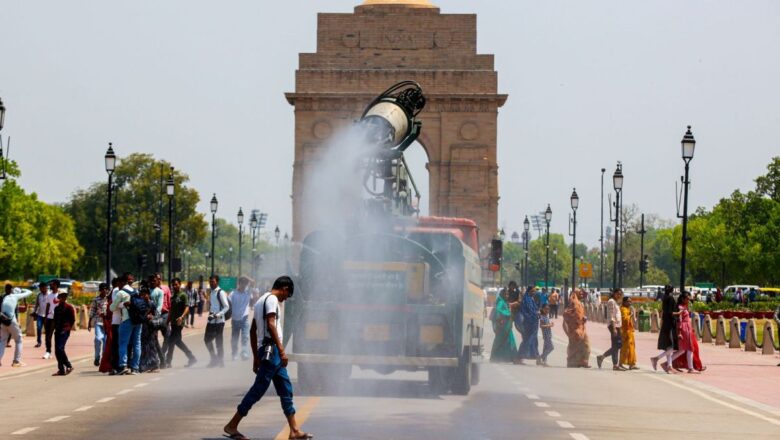
    New Delhi: The national capital is heading towards a warmer-than-usual February, with maximum temperatures steadily climbing and expected to touch the 30°C mark in the coming days. Weather experts say that despite the possibility of a weak western disturbance, a significant dip in temperature is unlikely. Delhi’s maximum temperature on Sunday stood at 28.5°C four degrees above normal for mid-February. The India Meteorological Department (IMD) has forecast that the mercury may rise further to 29°C on Monday and Tuesday, edging closer to the 30°C threshold typically seen later in the month. Data analysis of February 1–15 shows that the city recorded an average maximum temperature of 25°C, which is 1.9°C above the long-period average of 23.14°C. Out of the first 15 d...
Forests Don’t Just Store Carbon They Help Keep People Alive Scientists Say

Forests Don’t Just Store Carbon They Help Keep People Alive Scientists Say

Breaking News
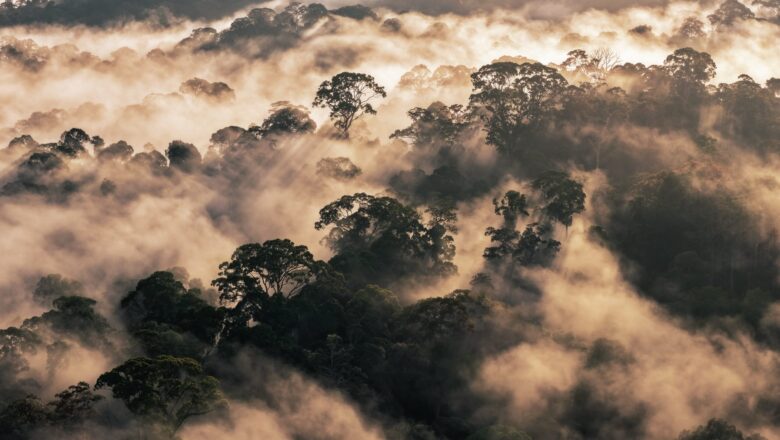
    A sweeping scientific review published this week in Science argues that forests do far more than absorb carbon dioxide they actively regulate temperature, water and local climate systems in ways that directly protect human health and livelihoods. The paper, titled “More than mitigation: The role of forests in climate adaptation,” synthesizes decades of research to show that forests function as climate infrastructure, moderating heat extremes, stabilizing rainfall and creating microclimates that support agriculture and daily life. At local scales, intact forests act as thermal buffers. Tree canopies shade the ground while evapotranspiration the process by which trees release water vapor converts heat into moisture, lowering surrounding air temperatures. Across n...
Paying to Breathe: India Expanding ‘Pollution Economy’ Raises Questions on Inequality and Public Investment

Paying to Breathe: India Expanding ‘Pollution Economy’ Raises Questions on Inequality and Public Investment

Breaking News
As air quality worsens and access to safe drinking water remains uneven, India is witnessing the rapid rise of what analysts describe as a “pollution economy” a growing private marketplace built around protection from environmental exposure. From air and water purifiers to N95 masks, monitoring devices and filtration services, environmental degradation is increasingly being converted into consumer demand. While this ecosystem is generating jobs, startups and revenue streams, it also signals a troubling shift: protection from pollution is becoming a private expense rather than a public guarantee. The Union Budget 2026–27 reduced allocation under the “Control of Pollution” head to ₹1,091 crore, down from last year’s revised estimate of ₹1,300 crore. Key institutions such as the Central...
Gujarat Tops India With 1,560 Forest Land Diversion Approvals in Five Years

Gujarat Tops India With 1,560 Forest Land Diversion Approvals in Five Years

Breaking News, Disasters
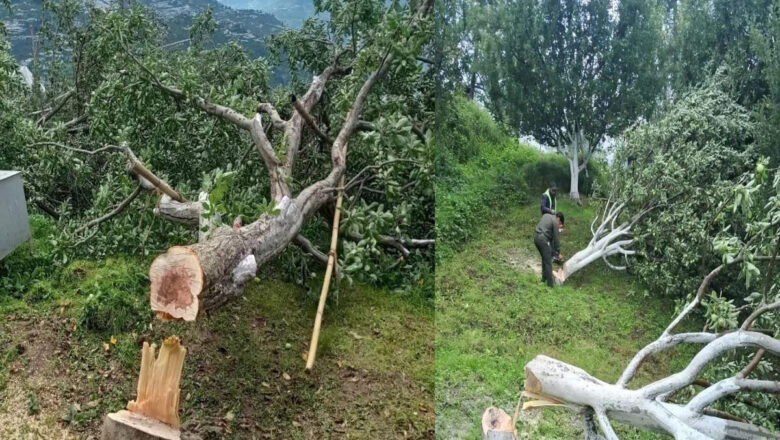
    Gujarat has recorded the highest number of approvals for diversion of forest land for non-forest purposes in the country over the past five financial years, according to data tabled in the Rajya Sabha. In a written reply to an unstarred question by Member of Parliament Sanjay Singh on February 5, the Ministry of Environment, Forest and Climate Change stated that Gujarat cleared 1,560 proposals under the Van (Sanrakshan Evam Samvardhan) Adhiniyam, 1980, between April 1, 2020, and March 31, 2025 the highest among all states and union territories. Haryana followed with 1,424 approvals, Uttar Pradesh with 1,188, Punjab with 1,067, and Madhya Pradesh with 902. Across the country, a total of 10,026 proposals were approved during the five-year period, while only 120 were...
New Zealand’s Deadliest Natural Hazard: Why Landslides Continue to Claim Lives Despite Known Risks

New Zealand’s Deadliest Natural Hazard: Why Landslides Continue to Claim Lives Despite Known Risks

Breaking News
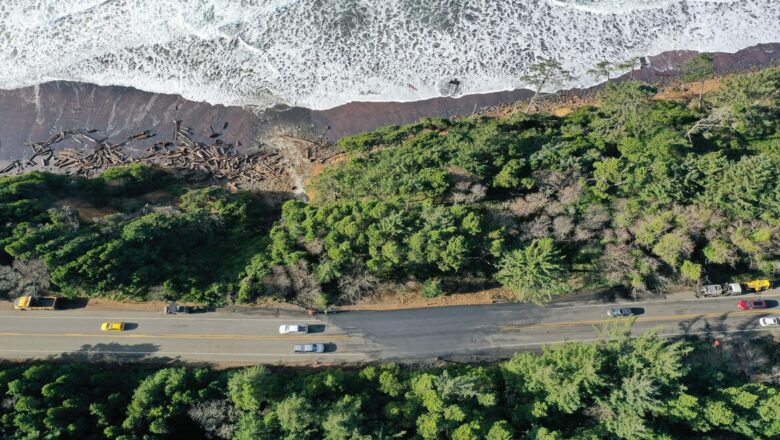
    The recent deaths of eight people in two separate landslides in New Zealand have reignited a difficult national conversation. While investigations will focus on technical questions about what failed and why, a broader and more uncomfortable issue demands attention: why does New Zealand continue to accept the human and financial toll of landslides? Contrary to popular belief, earthquakes and volcanic eruptions are not the country’s deadliest natural hazards. Over the past 200 years, landslides have claimed approximately 1,800 lives in Aotearoa New Zealand more than twice the combined death toll from earthquakes and volcanic activity during the same period. Landslides are often overlooked because they tend to cause fatalities in small numbers, scattered over time. T...
Solar Storms and Seismic Shocks New Link Between Ionospheric Disturbances and Earthquake Triggers

Solar Storms and Seismic Shocks New Link Between Ionospheric Disturbances and Earthquake Triggers

Breaking News
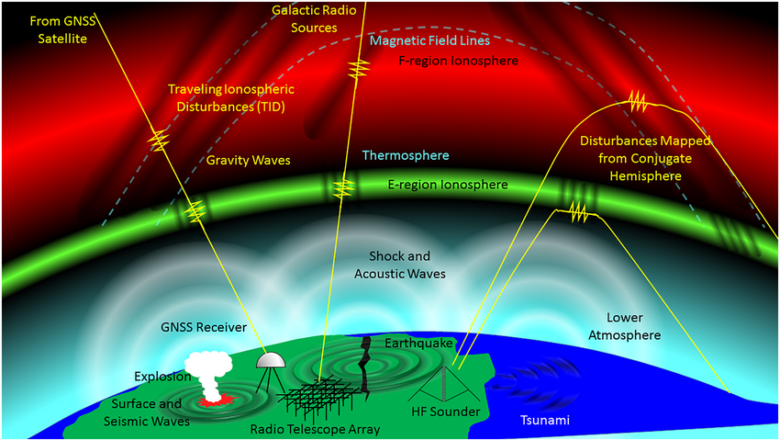
Researchers at Kyoto University have introduced a groundbreaking theoretical model suggesting that disturbances in the ionosphere particularly those triggered by intense solar activity may influence earthquake initiation under specific geological conditions. The study does not claim to predict earthquakes. Instead, it proposes a physical mechanism through which variations in ionospheric charge, caused by phenomena such as solar flares, could exert electrostatic forces within fragile zones of the Earth’s crust and potentially contribute to fracture processes when faults are already near failure. New Electrostatic Model of the Earth–Ionosphere System According to the researchers, fractured regions within the Earth’s crust may contain high-temperature, high-pressure water, possibly i...
‘No Red Tape’ for Diverting Tiger Reserve Land? Single Window Clearance on Govt Portal Sparks Alarm

‘No Red Tape’ for Diverting Tiger Reserve Land? Single Window Clearance on Govt Portal Sparks Alarm

Breaking News
    A listing on the government’s National Single Window System (NSWS) portal offering approval for the diversion of tiger reserve land for “ecologically unsustainable uses” has triggered alarm among environmentalists and raised serious questions about conservation policy. The NSWS platform, designed to streamline approvals for businesses and infrastructure projects, includes a clearance category under the environment ministry that allows applications to divert tiger reserve land for activities such as mining, industry and other non-ecological uses. Conservationists say the very existence of such an option contradicts the core purpose of tiger reserves and the Wildlife (Protection) Act, 1972. The NSWS is a digital platform that guides project proponents in identify...
China Clean Air Drive Cuts Smog but Unintentionally Adds to Global Warming, Study Warns

China Clean Air Drive Cuts Smog but Unintentionally Adds to Global Warming, Study Warns

Breaking News
    China’s aggressive campaign to reduce air pollution has delivered dramatic improvements in public health and air quality over the past decade. However, new research suggests that the same policies may have unintentionally contributed to a small but measurable increase in global warming. The study, published in Geophysical Research Letters, finds that sharp reductions in sulfur dioxide emissions from China have lowered atmospheric sulfate aerosols tiny particles that previously reflected sunlight back into space and exerted a cooling effect on the planet. While the environmental and health benefits of cleaner air are undeniable, scientists say the climate system is responding in complex ways. Decade of sweeping reforms China launched its Air Pollution Prevent...