Wednesday, June 3News That Matters

Climate Actions

India Warns of Monsoon  Cyclone Forecast Risks as US Climate Cuts Shake Global Weather Tracking

India Warns of Monsoon Cyclone Forecast Risks as US Climate Cuts Shake Global Weather Tracking

Breaking News, Climate Actions, Opinions
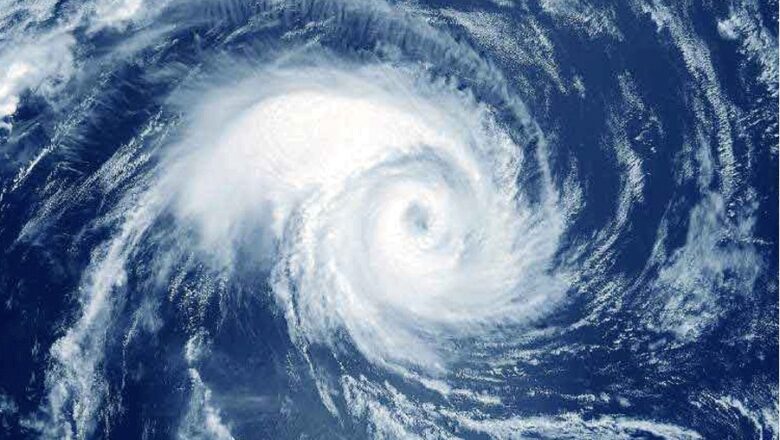
Indian scientists have raised alarms over job cuts at the United States’ National Oceanic and Atmospheric Administration, warning that reduced climate observations could disrupt India’s monsoon forecasts and cyclone tracking. The layoffs, part of the Donald Trump administration’s efforts to reduce the federal workforce, have affected hundreds of meteorologists and climate experts responsible for weather monitoring and forecasting. Union Ministry of Earth Sciences Secretary M Ravichandran expressed concerns about the potential impact on weather predictions. He explained that fewer ocean observations mean less data for forecast models, ultimately reducing predictability. Climate scientist Roxy Mathew Koll from the Indian Institute for Tropical Meteorology called the NOAA layoffs a global ...
Cyclone Alfred Set to Strike Southeast Queensland After landfall

Cyclone Alfred Set to Strike Southeast Queensland After landfall

Breaking News, Climate Actions, Disasters
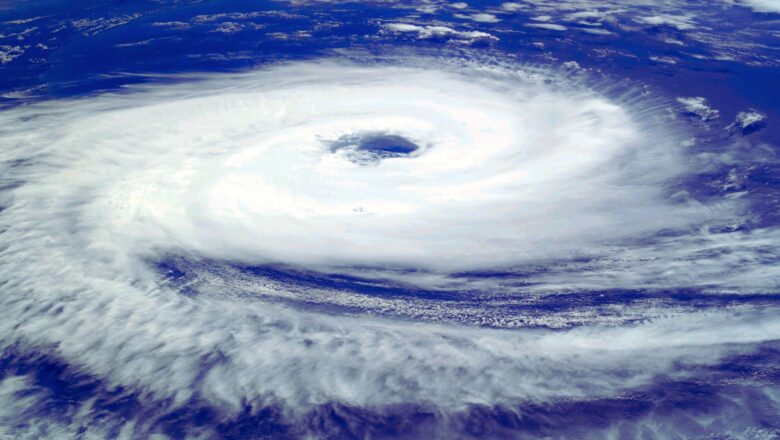
Southeast Queensland is bracing for the impact of Tropical Cyclone Alfred, expected to make landfall late Thursday as a Category 2 storm. This marks the first cyclone to hit so far south in half a century, since ex-Tropical Cyclone Zoe in 1974. Cyclone Alfred, which initially formed over the Coral Sea nine days ago, intensified to a severe Category 4 storm before weakening as it moved into cooler waters. However, it has now regained strength and changed direction, making a direct approach toward Queensland’s heavily populated coastal areas. With wind gusts reaching up to 164 km/h, the cyclone is expected to cause damage to homes, trees, power lines, and beachside infrastructure along the Sunshine Coast and Gold Coast. Authorities have issued a flood watch for regions from Maryborough...
Rapid Ocean Warming Triggers 240% Surge in Marine Heatwaves and Threatening Global Fisheries

Rapid Ocean Warming Triggers 240% Surge in Marine Heatwaves and Threatening Global Fisheries

Breaking News, Climate Actions
The world has witnessed an unprecedented surge in marine heatwaves (MHWs) over the past two years, with a staggering 240% increase in the number of MHW days during the summers of 2023-2024 compared to historical records. A recent study published in Nature Climate Change warns that nearly 10% of the world's oceans have recorded the highest sea surface temperatures (SSTs) ever observed four times higher than the historical annual average. The primary driver behind this alarming trend is human-induced climate change, which has been further amplified by El Niño a natural climate phenomenon in the Pacific Ocean known for warming sea surface temperatures and record-low global cloud cover. Escalating Ocean Heatwaves and Their Devastating Consequences Marine heatwaves occur when ocean tem...
Urbanisation Disappear Eight Dragonfly Species from Pune as 27 New Ones Discovered

Urbanisation Disappear Eight Dragonfly Species from Pune as 27 New Ones Discovered

Breaking News, Climate Actions, Environment
A recent study has revealed a dramatic shift in Pune’s dragonfly population, with eight species vanishing while 27 new species have been discovered. Conducted by researchers and citizen scientists, the study attributes the loss of local species to land-use changes, water pollution, shifting weather patterns, and rapid urbanisation. Published in the International Journal of Tropical Insect Science the research was led by scientists from Maharashtra Institute of Technology-World Peace University and conducted between 2019 and 2022 across 52 locations in Pune. The city, which falls within the Western Ghats and Deccan Peninsula biogeographic zones, is home to a rich diversity of odonates, the insect order that includes dragonflies and damselflies. Dragonflies as Environmental Indicators ...
Unplanned Urbanisation Fuels Rising Heat Managing Blue-Green Spaces Key to Mitigation

Unplanned Urbanisation Fuels Rising Heat Managing Blue-Green Spaces Key to Mitigation

Breaking News, Climate Actions, Environment
Urbanisation is coming at the cost of natural blue and green spaces leading to a surge in surface temperatures and exacerbating the Urban Heat Island (UHI) effect. Researchers warn that without sustainable urban planning or urban centres especially in developing nations like India will face hazardous heat stress, threatening both human health and local ecosystems. Urbanisation and Rising Temperatures The C(UN) estimates that by 2050, 68% of the global population will live in urban areas, with 90% of this growth concentrated in Asia and Africa. As a result, the rate of urban land expansion is already twice as fast as population growth, leading to a dramatic transformation of landscapes. Studies project that by the end of the 21st century, the Land Surface Temperature (LST) could ri...
Rajasthan Churu Leaving Farmers Devastated as Crops Destroyed in Thar Desert’s Unexpected Winter Scene

Rajasthan Churu Leaving Farmers Devastated as Crops Destroyed in Thar Desert’s Unexpected Winter Scene

Breaking News, Climate Actions
The Churu district of Rajasthan known for its scorching temperatures and arid terrain witnessed an unusual hailstorm and heavy rainfall, transforming parts of the Great Indian Thar Desert into a surreal winter-like landscape. Villages such as Bhanipura, Bisarasar, Rajasar, and Sardarshahar were blanketed in hail, with farmers counting heavy losses as crops neared harvest. Hailstones, described as the size of jujubes, wreaked havoc on farmlands, devastating mustard, wheat, barley, isabgol, fenugreek, and gram crops. Vishnu Parikh, a farmer from Rajasar Panwaran, expressed his distress, stating, "Everything we worked for this season is gone in minutes. The damage is severe." Another farmer, Raj Kumar Sharma, called for immediate government relief and compensation, fearing an economic setb...
Cloudburst Triggers Flash Floods in Himachal’s Kangra, Villages Cut Off as Roads Blocked and Homes Damaged

Cloudburst Triggers Flash Floods in Himachal’s Kangra, Villages Cut Off as Roads Blocked and Homes Damaged

Breaking News, Climate Actions, Disasters
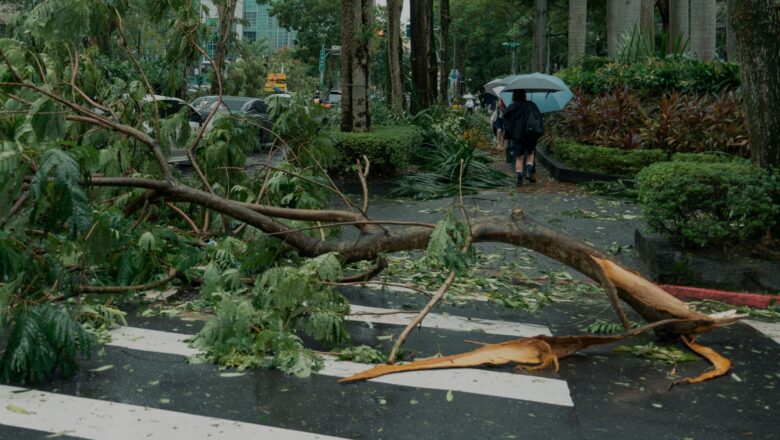
A cloudburst in Himachal Pradesh’s Kangra district has caused flash floods, leaving villages cut off and damaging homes, roads, and vehicles. The worst-affected area is Luwai village in the remote Chhota Bhanghal valley. Heavy rainfall over the past 48 hours has led to landslides and rising water levels. Four vehicles were buried under debris, while 14 houses and a middle school building suffered severe damage. Power supply poles have been uprooted, leaving many villages without electricity. Landslides and fallen trees have blocked roads, stopping traffic in areas like Multhan, Luhardi, Barot, and Kothi Kohar. Hundreds of vehicles are stranded as roads remain covered with snow and large rocks. To prevent further damage, authorities have opened the floodgates of two hydroelectric p...
Mass NOAA Layoffs Spark Outrage Raise Alarm Over Weather Forecasting, National Security

Mass NOAA Layoffs Spark Outrage Raise Alarm Over Weather Forecasting, National Security

Breaking News, Climate Actions, Learning & Developments
Hundreds of employees at the National Oceanic and Atmospheric Administration (NOAA) have been laid off as part of the Trump administration’s sweeping effort to reduce the size of the federal government. The move has triggered strong backlash from lawmakers, scientists, and former NOAA officials, who warn of severe risks to public safety, economic stability, and national security. The layoffs, which began on February 27, targeted probationary employees—those with less than two years of service or who had recently been promoted or transferred. The Commerce Department, which oversees NOAA, issued termination notices, with some employees given as little as two hours to leave their offices, according to NPR. Weather Forecasting at Risk NOAA plays a crucial role in weather forecasting, ...
IMD Reports India Faces Hottest February in 125 Years

IMD Reports India Faces Hottest February in 125 Years

Breaking News, Climate Actions, Opinions
February 2025 has been the hottest in India since 1901, with the average mean temperature reaching 22.04°C, according to data from the India Meteorological Department (IMD). The month also recorded the second-highest maximum temperature at 29.07°C, nearly 1.5°C above normal. Experts attribute this extreme heat to climate change and the absence of western disturbances. Unprecedented Heat and Rainfall Deficit The IMD report highlights that February 2025 was not only abnormally warm but also among the driest in 125 years. The country received less than half of its usual rainfall, with an overall deficit of 59% during the winter season (January-February). Central India was hit hardest, recording an 89.3% rainfall deficit, while Northwest India saw a 64.4% shortfall. The cumulative rainfa...
Experts Warn of Rising Urban Heat and Extreme Weather at Anil Agarwal Dialogue 2025

Experts Warn of Rising Urban Heat and Extreme Weather at Anil Agarwal Dialogue 2025

Breaking News, Climate Actions, Thoughts & Talks
At the Anil Agarwal Dialogue 2025, climate experts painted a grim picture of India's worsening extreme weather, highlighting urban heat, rising nighttime temperatures, and the growing impact of climate change on agriculture. Urban Heat and Warm Nights on the Rise In the session titled "In the Red: Why Are Our Cities Heating Up?", experts discussed how increasing urban heat islands and warm nights are endangering public health and livelihoods. Climate scientist Roxy Mathew Koll from the Indian Institute of Tropical Meteorology, Pune, explained that India is highly vulnerable to extreme weather due to its tropical location and rapidly warming oceans. “The Indian Ocean may enter a permanent heatwave state by 2050,” Koll warned, adding that oceanic heatwaves could increase from 20–50 ...