Wednesday, June 3News That Matters

Climate Actions

India Among Top 10 Nations Hit Hard by Extreme Weather: CRI 2025

India Among Top 10 Nations Hit Hard by Extreme Weather: CRI 2025

Breaking News, Climate Actions, Opinions
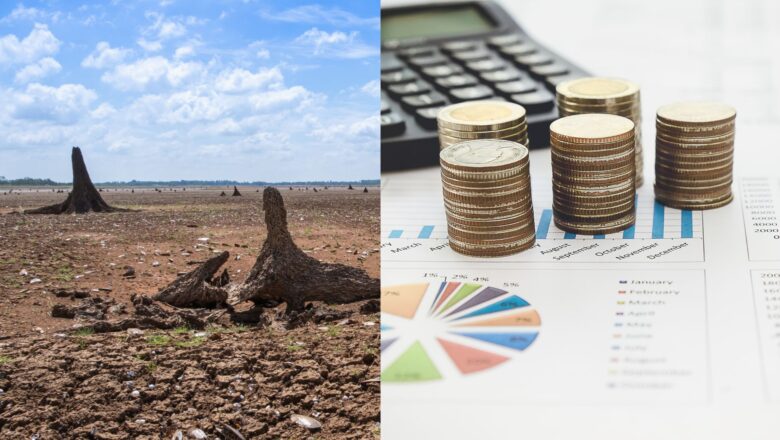
India recorded over 400 extreme weather events between 1993 and 2022, leading to nearly USD 180 billion in inflation-adjusted losses and at least 80,000 fatalities, according to the Climate Risk Index (CRI) 2025 released by Germanwatch. The index, which ranks countries based on the economic and human toll of extreme weather, placed India among the top ten nations most affected during the 30-year period. The CRI used data from sources such as the EM-DAT international disaster database, the World Bank, and the International Monetary Fund (IMF). It analyzed 9,400 extreme weather events that resulted in over 7.65 lakh deaths globally and direct losses of USD 4.2 trillion. Dominica, China, and Honduras were the most affected, followed by Myanmar, Italy, India, Greece, Spain, Vanuatu, and the...
Panama Canal Faces Climate Risks But 2025 Brings Hope with High Water Levels

Panama Canal Faces Climate Risks But 2025 Brings Hope with High Water Levels

Breaking News, Climate Actions, Fact Check
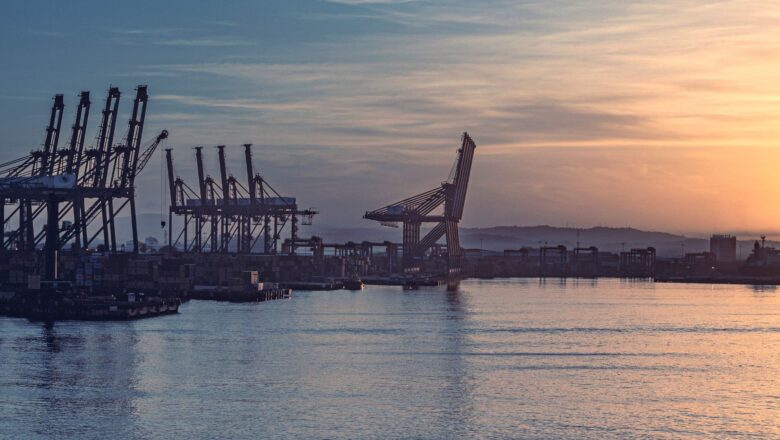
The Panama Canal, a vital 82-kilometer shipping artery connecting the Pacific and Atlantic Oceans, has long been a key player in global trade. As much as 5% of the world’s shipping relies on the canal, making it essential for supply chains. However, recent years have highlighted a growing concern: climate-driven water shortages. Since its opening in 1914, the canal has operated through a system of locks, raising ships about 25 meters to cross Gatun Lake before lowering them again. The lake, fed by rainfall, is critical to ensuring smooth passage for massive Neopanamax vessels carrying over 13,000 cargo containers. Each day, about 7 billion liters of water are extracted from the lake to operate the locks, making consistent rainfall essential. Panama’s typically high annual rainfall ov...
Climate Group Escalates Legal Fight Against Shell to Netherlands’ Supreme Court

Climate Group Escalates Legal Fight Against Shell to Netherlands’ Supreme Court

Breaking News, Climate Actions
Friends of the Earth Netherlands (FOE) is taking its legal battle against British multinational oil and gas company Shell to the Netherlands' Supreme Court. The environmental group is demanding that Shell adopt a clearly defined carbon reduction target, arguing that without a legally binding mandate, the company will not take meaningful steps to curb its emissions. The case follows the November 12, 2024 ruling by the Hague Court of Appeal in the Milieudefensie et al. vs. Royal Dutch Shell case. The court acknowledged Shell’s “special responsibility” as a major oil and gas producer to reduce greenhouse gas emissions but stopped short of imposing an “absolute reduction” obligation, such as the 45% cut by 2030 ordered by a lower court in 2021. The court also noted that current EU law does ...
Corruption Undermining Climate Action in Sub-Saharan Africa, Warns New Transparency Report

Corruption Undermining Climate Action in Sub-Saharan Africa, Warns New Transparency Report

Breaking News, Climate Actions, Fact Check
A new report by Transparency International, released on February 11, 2025, highlights the devastating impact of systemic corruption on climate action in sub-Saharan Africa. Titled 2024 Corruption Perceptions Index: Corruption is Playing a Devastating Role in the Climate Crisis, the report reveals how weak anti-corruption measures are hindering efforts to combat climate change. Sub-Saharan African nations urgently need substantial climate finance to implement their nationally determined contributions (NDCs) climate action plans submitted to the United Nations. However, misappropriation, theft, and misallocation of climate funds are threatening these efforts. The Corruption Perceptions Index (CPI), which ranks 180 countries based on perceived levels of public sector corruption on a sca...
UNDRR, WMO Launch Global Early Warning System Investment Observatory

UNDRR, WMO Launch Global Early Warning System Investment Observatory

Breaking News, Climate Actions, Environment
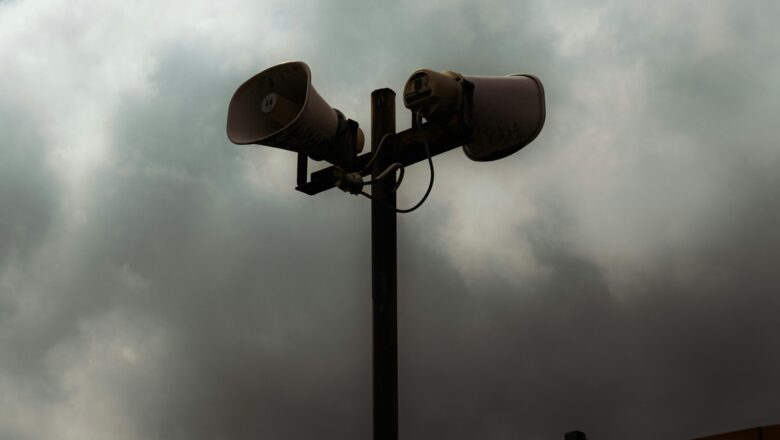
The United Nations Office for Disaster Risk Reduction (UNDRR) and the World Meteorological Organization (WMO) have launched the Global Observatory for Early Warning System (EWS) Investments to improve tracking and coordination of funding for disaster preparedness. This initiative aims to support the UN’s goal of global EWS coverage by 2027, announced by Secretary-General António Guterres in 2022. Early warning systems are critical in saving lives during extreme weather events, which are becoming more frequent and severe due to the climate crisis. However, fragmented financing has limited their global reach. Launched in December 2024, the Observatory provides an overview of funding flows from nine key financing institutions. It identifies gaps, avoids duplication, and ensures investme...
Study Finds Dust Storms Cost US $154B Annually Impacting Healthcare

Study Finds Dust Storms Cost US $154B Annually Impacting Healthcare

Breaking News, Climate Actions, Fact Check
A new study in Nature Sustainability reveals that wind erosion and blowing dust cost the U.S. economy around $154 billion each year, impacting healthcare, transportation, agriculture, energy, and households. Conducted by researchers from The University of Texas at El Paso (UTEP), George Mason University, and the U.S. Department of Agriculture, the study highlights the growing societal burden of dust storms, which are worsened by human land use, drought, and declining water resources. Thomas Gill, Ph.D., a UTEP earth sciences professor, emphasized the significance of these findings. "Blowing dust is a major expense and creates great societal harm," he said, comparing its costs to those of hurricanes and other natural disasters. Healthcare costs make up a significant portion of the tot...
Climate & Maternal Health Curtin Study Links Air Pollution to Prolonged Pregnancy

Climate & Maternal Health Curtin Study Links Air Pollution to Prolonged Pregnancy

Breaking News, Climate Actions, Environment, Learning & Developments
New research from Curtin University reveals that exposure to outdoor air pollution and extreme temperatures during pregnancy may increase the risk of prolonged pregnancies, offering fresh insights into the effects of climate change on maternal health. The study, which analyzed nearly 400,000 births in Western Australia, found that higher exposure to fine particulate air pollution (PM2.5) and biothermal stress a combination of temperature, humidity, wind speed, and human physiology was linked to pregnancies lasting beyond 41 weeks. Dr. Sylvester Dodzi Nyadanu, the study’s lead author from Curtin’s School of Population Health, explained that while preterm births have been studied extensively, this is the first research to explore the impact of environmental factors on prolonged pregnan...
Bennu Asteroid Potential Impact How a Collision Could Trigger Global Climate Crisis and Food Insecurity

Bennu Asteroid Potential Impact How a Collision Could Trigger Global Climate Crisis and Food Insecurity

Breaking News, Climate Actions, Space
Bennu, a near-Earth asteroid, is classified as a "rubble pile" object a loose collection of rocky materials rather than a solid mass. It currently makes its closest approach to Earth every six years, coming within about 186,000 miles (299,000 km). Scientists estimate there is a one-in-2,700 chance that Bennu could collide with Earth in September 2182. If Bennu were to strike our planet, the consequences would be catastrophic. New research based on computer simulations has outlined the likely effects of such an impact, which would include immediate devastation and long-term global disruptions to climate, atmospheric chemistry, and photosynthesis. These disruptions could last for three to four years, according to the study published in the journal Science Advances. Lan Dai, a postdocto...
Harvey Mudd College Launches Course Exploring STEM’s Role in Wildfire Mitigation

Harvey Mudd College Launches Course Exploring STEM’s Role in Wildfire Mitigation

Breaking News, Climate Actions, Disasters
Harvey Mudd College has introduced a groundbreaking course designed to help STEM students critically analyze the societal impact of scientific and technological interventions. Developed as part of the college’s revised Core Curriculum in 2020, the course aims to address the long-standing challenge of ensuring students fully grasp the consequences of their work beyond technical proficiency. Taught by a team of eight instructors spanning disciplines such as biology, chemistry, computer science, mathematics, media studies, political science, religious studies, and science and technology studies, the course focuses on California wildfires. By examining the intersection of science, policy, and historical context, students explore how decisions in STEM fields shape real-world outcomes. One...
2025 record heat highlights January become the hottest month Ever in the history

2025 record heat highlights January become the hottest month Ever in the history

Breaking News, Climate Actions, Disasters, Environment
January 2025 was the hottest on record - a whole 1.7°C above pre-industrial levels. If many climate-watchers expected the world to cool slightly this year thanks to the natural "La Niña" phenomena, the climate itself didn't seem to get the memo. In fact, January 2025's record heat highlights how human-driven ocean warming is increasingly overwhelming these natural climate patterns. La Niña is a part of the El Niño southern oscillation, a climate fluctuation that slowly sloshes vast bodies of water and heat between different ocean basins and disrupts weather patterns around the world. El Niño was first identified and christened by Peruvian fishermen who noticed a dismal drop in their catch of sardines that coincided with much warmer than usual coastal waters. El Niño is now well known...