Wednesday, June 3News That Matters

Climate Actions

Global Temperature Crosses 1.5°C Threshold in 2024, Marking New Climate Era

Global Temperature Crosses 1.5°C Threshold in 2024, Marking New Climate Era

Breaking News, Climate Actions, Fact Check
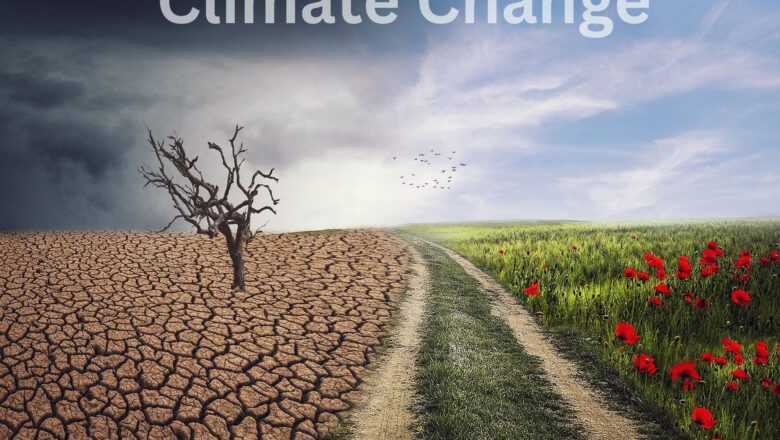
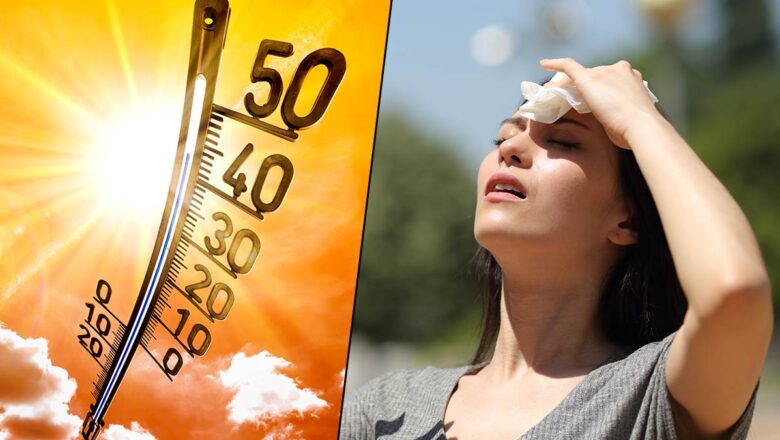
The average global temperature anomaly in 2024 surpassed the critical 1.5°C threshold for the first time, signaling a significant milestone in the planet’s ongoing warming trend. This development, highlighted by the World Meteorological Organization (WMO), marks a clear step into a phase of sustained global warming. The 1.5°C limit, a target established under the 2015 Paris Agreement, aimed to prevent the worst impacts of climate change by keeping global temperature rise below this level compared to pre-industrial times (1850-1900). However, the WMO confirmed that the annual average global temperature in 2024 was 1.55°C above pre-industrial levels, based on six independent datasets. The European Commission’s Copernicus Climate Change Service (C3S) added that 18 of the last 19 months ...
Delhi-NCR Jolted by 4.0 Magnitude Earthquake Residents Evacuate High-Rises

Delhi-NCR Jolted by 4.0 Magnitude Earthquake Residents Evacuate High-Rises

Breaking News, Climate Actions, Disasters
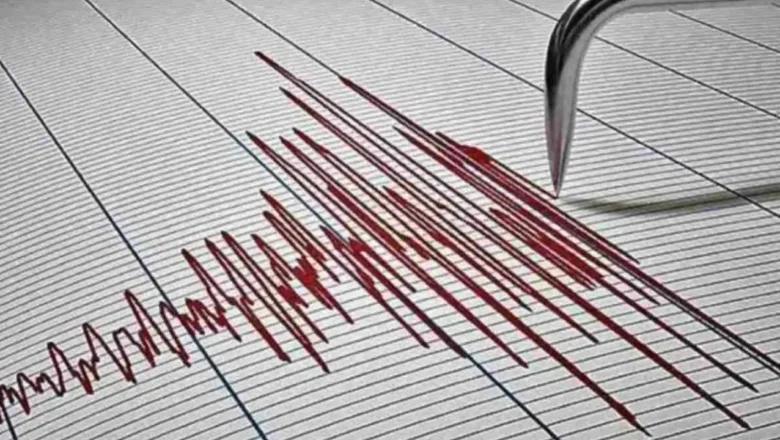
In the early hours of Monday, a 4.0 magnitude earthquake shook Delhi-NCR, sending residents into a state of alarm. The National Center for Seismology confirmed the earthquake struck at 5:36 am, with its epicenter located near Durgabai Deshmukh College of Special Education in Dhaula Kuan, New Delhi, at a shallow depth of five kilometers. The tremors were felt across Delhi, Noida, Greater Noida, and Ghaziabad, prompting residents of high-rise buildings to evacuate as a precaution. The region has a history of small tremors, with a similar 3.3 magnitude quake recorded in 2015. Local leaders quickly responded to the situation. Aam Aadmi Party (AAP) leader Atishi and the Delhi Police used social media to urge residents to remain calm and prioritize safety. Authorities assured that emergenc...
Earth Surpasses 1.5°C Warming Threshold in 2024, Entering Era of Sustained Global Heat

Earth Surpasses 1.5°C Warming Threshold in 2024, Entering Era of Sustained Global Heat

Breaking News, Climate Actions, Fact Check
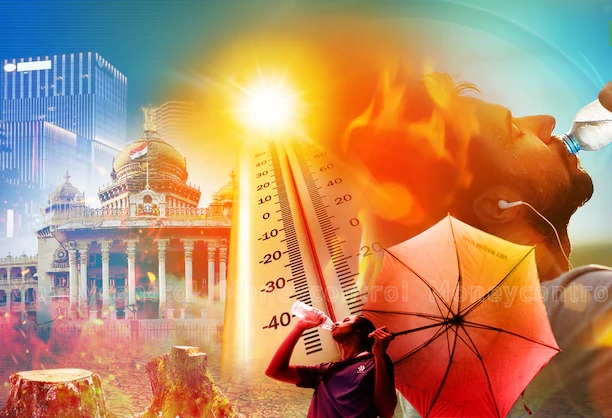
In 2024, the average annual global temperature anomaly officially surpassed the critical 1.5 degrees Celsius threshold, marking a significant milestone in the planet’s long-term warming trend. Climate change researchers now suggest that the world has entered a phase of sustained warming, with drastic implications for global ecosystems and societies. The temperature limit of 1.5°C above pre-industrial levels set as a target by the Paris Agreement in 2015 was originally intended to prevent the worst impacts of climate change. However, almost every month in recent years has individually surpassed this threshold, signaling that the goal is now nearly impossible to meet. Data from the World Meteorological Organization (WMO) revealed that the average global temperature in 2024 reached appr...
Global Alarm Unequal EWS Funding Threatens UN’s 2027 Climate Safety Goal

Global Alarm Unequal EWS Funding Threatens UN’s 2027 Climate Safety Goal

Breaking News, Climate Actions
With the UN’s 2027 goal of universal early warning system (EWS) coverage fast approaching, funding distribution remains uneven, with over half of global investments concentrated in just five countries China, Bangladesh, India, Pakistan, and Indonesia. The Early Warnings for All (EW4All) initiative, launched in 2022, aims to protect vulnerable populations from increasingly severe climate-related disasters. While EWS projects saw record funding in 2023, Small Island Developing States (SIDS) and Least Developed Countries (LDCs) still face significant resource gaps. To track and optimize funding, the UN and World Meteorological Organization (WMO) launched the Global Observatory for Early Warning System Investments in December 2024. This platform monitors funding from key financial instit...
Climate Risk Index Shows Global Toll of Extreme Weather, Calls for Urgent Action

Climate Risk Index Shows Global Toll of Extreme Weather, Calls for Urgent Action

Breaking News, Climate Actions
The Climate Risk Index (CRI) highlights the devastating impact of climate-related extreme weather events on countries, ranking them based on the economic and human toll experienced. Using data from the EM-DAT international disaster database, the World Bank, and the International Monetary Fund, the CRI measures fatalities, affected populations, injuries, and homelessness to assess countries' vulnerability. The countries most affected by extreme weather rank highest on the CRI, serving as a stark warning of their exposure to frequent or severe climate disasters. The CRI takes both absolute and relative impacts into account, creating a comprehensive ranking based on six indicators: economic losses and fatalities, along with absolute and relative numbers of affected people. It provides insi...
Cyclone Zelia Set to Hit Western Australia with Destructive Force

Cyclone Zelia Set to Hit Western Australia with Destructive Force

Breaking News, Climate Actions, Disasters
Severe Tropical Cyclone Zelia is barreling toward Australia’s northwest coast and is expected to make landfall near Port Hedland early Friday evening. This powerful category five storm poses a significant threat to Western Australia’s coastline and inland regions, with the potential to cause widespread damage. Port Hedland, Australia’s busiest iron ore export port, is directly in Zelia’s path. Surrounding towns like Marble Bar, Tom Price, and Paraburdoo are also on high alert for strong winds and heavy rainfall. The Bureau of Meteorology (BOM) warns that sustained winds of 205 km/h and gusts reaching 290 km/h could flatten homes, topple trees, and down power lines. Zelia’s strength underscores growing concerns about the increasing severity of tropical cyclones as global warming conti...
Fujitsu, Yokohama Univ Predict Typhoon Tornadoes Using Supercomputer

Fujitsu, Yokohama Univ Predict Typhoon Tornadoes Using Supercomputer

Breaking News, Climate Actions, Disasters, Learning & Developments
Fujitsu Limited and Yokohama National University have achieved a groundbreaking milestone by developing the world's first real-time prediction system for multiple tornadoes associated with typhoons. Utilizing Fujitsu’s Fugaku supercomputer and an enhanced version of the Cloud Resolving Storm Simulator (CReSS), this innovation significantly improves disaster preparedness by delivering more accurate and faster tornado forecasts. This advanced system reduces prediction times from over 11 hours to just 80 minutes, allowing forecasts up to four hours ahead of tornado occurrences. Notably, the prediction model only used 5% of Fugaku’s computational capacity, demonstrating the potential for larger-scale simulations and even quicker predictions. Addressing Tornado Prediction Challenges Ab...
World Sets Record January Heat Despite La Nina Scientists Debate Accelerating Global Warming

World Sets Record January Heat Despite La Nina Scientists Debate Accelerating Global Warming

Breaking News, Climate Actions
The world warmed to a new monthly heat record this January, despite cooling factors like a La Nina event and an abnormally chilly United States, according to the European climate service Copernicus. This surprising temperature rise is sparking debate among scientists, with some arguing that global warming is accelerating. Copernicus reported that January 2025 was 0.09 degrees Celsius warmer than January 2024, the previous hottest January on record. It was also 1.75 degrees Celsius warmer than pre-industrial levels. This marks the 18th month out of the last 19 in which the world hit or surpassed the 1.5-degree warming threshold set by the Paris Agreement. However, scientists only consider the threshold breached when temperatures stay above it for 20 consecutive years. Copernicus has t...
Columbia University Launches Climate Finance Masters Program

Columbia University Launches Climate Finance Masters Program

Breaking News, Climate Actions
Columbia University’s Climate School has introduced a groundbreaking master’s degree in climate finance, the first of its kind in the U.S. The program, launching this fall, aims to equip professionals with financial and scientific expertise to address the challenges and opportunities of climate change and the global energy transition. Developed in partnership with Columbia Business School, the program will focus on a multidisciplinary approach to climate crisis solutions, covering topics like climate science, international finance, capital markets, and energy financing. Alexis Abramson, Dean of the Climate School, highlighted the need for collaborative problem-solving, emphasizing the importance of integrating finance with climate strategies to combat the global crisis. Costis Mag...
B.C. Health Workers Face Mounting Climate Crisis Strain

B.C. Health Workers Face Mounting Climate Crisis Strain

Breaking News, Climate Actions
British Columbia has faced a series of climate-related extreme weather events in recent years, with severe consequences for both residents and health services. The 2021 heat dome led to over 600 heat-related deaths and overwhelmed emergency services, while wildfires caused increased illnesses and forced the evacuation of thousands. B.C.’s health system, already strained by staffing shortages and burnout from the COVID-19 pandemic, has worked to respond to these emergencies. However, many health service workers reported physical and mental health challenges during and after climate events. Front-line staff, such as paramedics and home health workers, faced exposure to heat and poor air quality, especially when facilities lacked proper cooling and air filtration systems. The mental tol...