Wednesday, March 18News That Matters

Climate Actions

Heat Waves on the Rise: How Jet Stream Changes Create Dangerous Heat Domes

Heat Waves on the Rise: How Jet Stream Changes Create Dangerous Heat Domes

Breaking News, Climate Actions
Recent meteorological diagrams reveal the alarming rise of heat domes over the continental United States, raising concerns as climate patterns shift. According to NOAA, these heat domes form when high pressure in the mid-atmosphere acts like a cap, trapping heat at the Earth’s surface. The longevity of these heat domes is closely tied to the behavior of the jet stream, a fast-moving band of winds located about 30,000 feet above sea level. The jet stream typically flows from west to east, influenced by temperature differences between warm tropical air and cold polar air. However, its meandering path can significantly affect weather patterns. Jet Stream's Impact on Weather As the jet stream meanders, it creates areas of high (H) and low (L) pressure, influencing weather across the U...
UNFCCC Report: Developing Nations Require Up to $6.85 Trillion for Climate Goals by 2030

UNFCCC Report: Developing Nations Require Up to $6.85 Trillion for Climate Goals by 2030

Breaking News, Climate Actions
In a groundbreaking revelation, the United Nations Framework Convention on Climate Change (UNFCCC) has announced that developing countries will need between $5.012 trillion and $6.852 trillion to meet their climate commitments by 2030. This estimate, detailed in the second Needs Determination Report (NDR) released on September 10, 2024, significantly raises the stakes in global climate finance negotiations. The report, which updates figures from the initial 2021 NDR, represents a vital resource for informing decisions at the upcoming COP29 summit in Azerbaijan, where the contentious issue of the New Collective Quantified Goal (NCQG) on climate finance will be debated. With developed nations already lagging behind in delivering the $100 billion annual climate finance goal, the updated fi...
ASRA Report Calls for Urgent Shift to Systemic Risk Management Amid Rising Global Instability

ASRA Report Calls for Urgent Shift to Systemic Risk Management Amid Rising Global Instability

Breaking News, Climate Actions, Disasters
A groundbreaking report from the Accelerator for Systemic Risk Assessment (ASRA) calls for a radical shift in how governments, businesses, and communities assess and manage global risks. The report, titled Facing Global Risks with Honest Hope, highlights the growing interconnected threats facing the world, from climate change and biodiversity loss to geopolitical conflicts and the unchecked rise of artificial intelligence. Developed by over 50 experts, the report argues that the current approach to risk assessment is outdated and fragmented, leaving decision-makers ill-prepared for today's "polycrisis" moment. Instead of addressing risks in isolation, the authors emphasize the need for a systemic approach that integrates cross-sector collaboration and global governance reforms. One o...
Australia Prepares for Extreme Weather Season: Bureau Warns of Heatwaves, Bushfires, and Severe Storms

Australia Prepares for Extreme Weather Season: Bureau Warns of Heatwaves, Bushfires, and Severe Storms

Breaking News, Climate Actions, Disasters
As Australia heads into its notorious severe weather season, the Bureau of Meteorology has issued a stark warning: the remainder of 2024 is set to bring higher-than-normal temperatures, along with an increased risk of extreme weather events. From heatwaves and bushfires to potential flooding and severe storms, the country could be facing multiple hazards at once. Nation on Alert for Extreme Weather The severe weather season, which typically runs from October to April, has already made an early start. In recent weeks, Australians have witnessed extreme heat sweeping across the country, powerful winds in the southeast, floods in Tasmania, and damaging hailstorms in parts of Victoria. With these events already occurring, the Bureau’s forecast of an unusually warm spring is raising conce...
Heavy Rains to Lash Calcutta and Coastal Bengal as Low-Pressure System Intensifies

Heavy Rains to Lash Calcutta and Coastal Bengal as Low-Pressure System Intensifies

Breaking News, Climate Actions
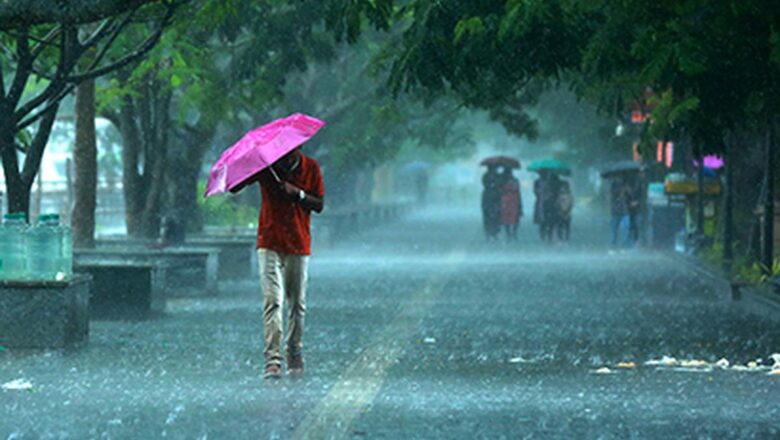
Calcutta experienced intermittent rain and overcast skies throughout Friday as a low-pressure system continued to gain strength over the Bay of Bengal. The city braced for heavier rainfall over the weekend, with the Met office predicting "heavy to very heavy rain" ranging from 70mm to 200mm between Friday morning and Saturday morning. By 8:30 PM on Friday, the Alipore weather station had recorded approximately 35mm of rainfall, though meteorologists cautioned that heavier downpours were still possible through Saturday. "Generally cloudy skies with heavy rain or thundershowers and one or two intense spells are expected in the next 24 hours," stated the Met forecast for the city, issued late Friday afternoon. Dark clouds loomed over Calcutta since late morning, and showers arrived i...
Climate Change Widening Inequalities Among Rural Poor, Women, and Youth:FAO Report

Climate Change Widening Inequalities Among Rural Poor, Women, and Youth:FAO Report

Breaking News, Climate Actions
A new report by the Food and Agriculture Organization (FAO) reveals how climate change is exacerbating inequalities among vulnerable rural populations, particularly women, youth, and the poor. The report, based on data from 24 low- and middle-income countries, highlights how extreme weather events are disproportionately affecting marginalized groups, resulting in severe income losses, heightened reliance on climate-sensitive agriculture, and the adoption of maladaptive strategies that threaten long-term livelihoods. Climate Vulnerability and Structural Inequalities The report emphasizes that rural communities, heavily dependent on agriculture and plagued by poverty, are among the most vulnerable to the adverse impacts of climate change. Disparities related to wealth, gender, and age ...
South Sudan Faces Permanent Displacement as Floods Ravage Communities Once Again

South Sudan Faces Permanent Displacement as Floods Ravage Communities Once Again

Breaking News, Climate Actions, Disasters
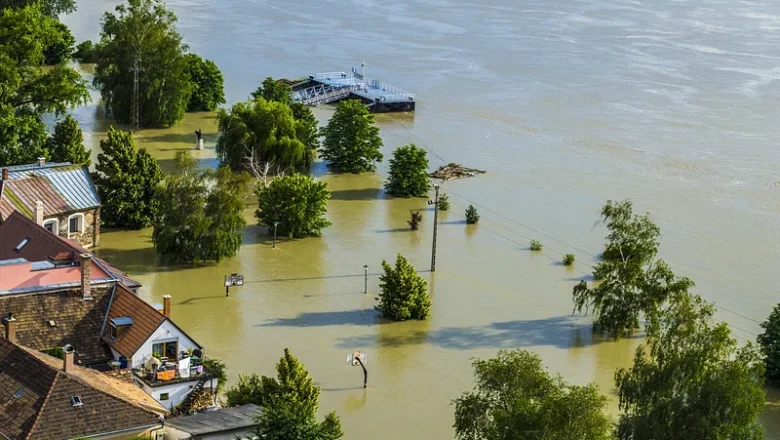
Enormous floods have struck South Sudan, affecting over 700,000 people as record water levels from Lake Victoria surge through the Nile. Communities in the Sudd region, already displaced by previous floods, now face the possibility of permanent displacement due to climate change. The Sudd, one of the world’s largest wetlands, experiences unique flooding patterns where water cannot easily drain back into the Nile, lingering for long periods. The recent floods, intensified by rising water levels in Lake Victoria, have overwhelmed traditional coping mechanisms of local communities such as the Dinka, Nuer, Anyuak, and Shilluk. Herders, once able to move cattle to higher ground, and farmers who planted after seasonal floods, are now struggling to adapt as the floodwaters persist. The prot...
Study Reveals Desertification and Soil Erosion Worsening Floods in North Africa

Study Reveals Desertification and Soil Erosion Worsening Floods in North Africa

Breaking News, Climate Actions
A new study by researchers from USC Viterbi School of Engineering and the University of Paris Cité has revealed that soil erosion caused by desertification is intensifying the impact of floods in coastal areas of North Africa and the Middle East. The research, published in Nature Communications, focused on the deadly 2023 floods in Derna, Libya, which resulted in over 11,300 deaths. The study suggests that increased soil erosion played a critical role in worsening the effects of these unusual desert floods. The researchers found that desertification, combined with rising seawater temperatures in the Eastern Mediterranean due to global warming, has led to intensified droughts and more frequent coastal rainstorms. These conditions are increasing soil erosion, leading to dangerous mudflows...
IMD Issues Severe Weather Alert: Harsh Winter Expected Due to La Niña

IMD Issues Severe Weather Alert: Harsh Winter Expected Due to La Niña

Breaking News, Climate Actions
The India Meteorological Department (IMD) has issued a severe weather alert, forecasting an unusually harsh winter across India, largely due to the onset of the La Niña phenomenon. This climate pattern, characterized by cooler-than-average sea surface temperatures in the equatorial Pacific Ocean, is expected to cause a significant drop in temperatures and increased rainfall throughout the country. In an announcement made on September 2, 2024, the IMD confirmed that the country is likely to experience one of its coldest winters in recent years due to La Niña. This phenomenon, which typically begins between April and June, is driven by strong easterly winds that push warm ocean waters westward, resulting in a cooling effect on the ocean's surface. Impact on Northern India Northern s...
Study Warns of Drastic Climate Extremes for Three-Quarters of Global Population Without Emissions Cuts

Study Warns of Drastic Climate Extremes for Three-Quarters of Global Population Without Emissions Cuts

Breaking News, Climate Actions, Environment
A new study has issued a stark warning about the impending global climate crisis, projecting that nearly 70% of the world’s population could face significant and rapid changes in extreme temperatures and rainfall over the next two decades if greenhouse gas emissions are not drastically reduced. This groundbreaking research was led by the CICERO Center for International Climate Research and supported by the University of Reading. The study, published in Nature Geoscience, reveals that up to 20% of the population could still face extreme weather risks even if emissions are reduced enough to meet the goals of the Paris Agreement. Without substantial action, however, this figure could soar to 70%, underscoring the urgent need for more aggressive climate mitigation strategies. Impact of R...