Monday, April 27News That Matters

Environment

Study Finds Children Born in 2020 to Face Twice as Many Wildfires as Those Born in 1960

Study Finds Children Born in 2020 to Face Twice as Many Wildfires as Those Born in 1960

Breaking News, Disasters, Environment
Children born in 2020 are projected to experience double the number of wildfires over their lifetimes compared to those born in 1960, according to recent studies. In regions like California, wildfires have become a common occurrence during the summer and fall seasons, releasing harmful particulate matter (PM₂.₅) into the air that poses significant health risks. Wildfire-produced PM₂.₅ can penetrate deep into the lungs, causing immediate respiratory issues. While short-term exposure is linked to acute health problems like asthma, the long-term effects of repeated exposure are still unclear. A major challenge is accurately measuring wildfire-related PM₂.₅ exposure, as the intensity of pollution can vary drastically from day to day. Current methods of measuring annual average PM₂.₅, whi...
Study Warns 70% of Global Population Will Face Extreme Weather by 2044

Study Warns 70% of Global Population Will Face Extreme Weather by 2044

Breaking News, Environment
A new study predicts that nearly 75% of the global population will face extreme weather events in the next two decades unless greenhouse gas emissions are drastically reduced. Led by climate scientists from the Center for International Climate Research (CICERO) in Norway, the research warns that even in the best-case scenario, 1.5 billion people will experience rapid and dangerous changes in weather patterns. Physicist Bjørn Samset from CICERO stresses that these extreme events, such as intense heatwaves, floods, and storms, are already locked in due to the current state of the climate. Samset explains, "The only way to deal with this is to prepare for a situation with a much higher likelihood of unprecedented extreme events, already in the next one to two decades." Recent climate da...
Study Warns of Drastic Climate Extremes for Three-Quarters of Global Population Without Emissions Cuts

Study Warns of Drastic Climate Extremes for Three-Quarters of Global Population Without Emissions Cuts

Breaking News, Climate Actions, Environment
A new study has issued a stark warning about the impending global climate crisis, projecting that nearly 70% of the world’s population could face significant and rapid changes in extreme temperatures and rainfall over the next two decades if greenhouse gas emissions are not drastically reduced. This groundbreaking research was led by the CICERO Center for International Climate Research and supported by the University of Reading. The study, published in Nature Geoscience, reveals that up to 20% of the population could still face extreme weather risks even if emissions are reduced enough to meet the goals of the Paris Agreement. Without substantial action, however, this figure could soar to 70%, underscoring the urgent need for more aggressive climate mitigation strategies. Impact of R...
Summer 2024 Becomes Hottest on Record, Likely Making 2024 Warmest Year Ever

Summer 2024 Becomes Hottest on Record, Likely Making 2024 Warmest Year Ever

Breaking News, Climate Actions, Environment
Summer 2024 has officially sweltered its way to becoming the hottest on record, according to the European climate service Copernicus. This milestone adds to the mounting evidence that 2024 is on track to be the warmest year ever measured by humanity. While a temporary La Niña event a cooling phenomenon affecting parts of the central Pacific is forecast for the last four months of the year, it’s unlikely to offset the unprecedented heat experienced throughout the year. Despite this cooling effect, the trend of extreme warmth is expected to continue, making it increasingly probable that 2024 will surpass all previous annual temperature records. Carlo Buontempo, a climate scientist at Copernicus, noted that while part of the record heat from last year was driven by the El Niño event, th...
Dust Storms: The Growing Environmental Crisis of the 21st Century

Dust Storms: The Growing Environmental Crisis of the 21st Century

Breaking News, Disasters, Environment
Dust storms an environmental disaster many associate with the 1930s Dust Bowl, are making a dramatic comeback on a global scale, threatening human health, economies, and ecosystems. As a result of deforestation, water mismanagement, unsustainable farming practices, desertification, and climate change, the frequency and intensity of dust storms are increasing, covering more geographical regions and posing serious risks to life and infrastructure. A Global Threat The dust storms of the Dust Bowl era caused immense damage to the ecology and agriculture of the American and Canadian prairies, but today's storms are spreading far beyond those borders. Dust particles, light enough to be carried by wind over vast distances, are now crossing continents, disregarding political boundaries. Area...
New Canadian Climate Tracker Highlights Soaring Costs of Climate Disasters, Calls for Proactive Adaptation

New Canadian Climate Tracker Highlights Soaring Costs of Climate Disasters, Calls for Proactive Adaptation

Breaking News, Climate Actions, Environment
Attribution science has become increasingly precise in linking extreme weather events to climate change, and a new tracker from the Canadian Climate Institute (CCI) is emphasizing the urgent need for proactive measures to limit the damage caused by climate-fueled disasters. The online tool provides real-time data on the financial toll of wildfires, floods, and droughts across the country, using media reports to paint a stark picture of the growing costs. This summer alone, Toronto and Jasper, separated by 3,400 kilometers, faced significant climate-related losses. According to the Toronto Star, a single afternoon of heavy rain in Toronto on July 16 could result in damages exceeding C$1 billion. Meanwhile, as reported by CBC and confirmed by CCI’s tracker, the wildfire that ravaged Jaspe...
Mysterious Formation of Earth’s Inner Core: How Mineral Physics is Unlocking Secrets Beneath Our Feet

Mysterious Formation of Earth’s Inner Core: How Mineral Physics is Unlocking Secrets Beneath Our Feet

Breaking News, Environment, Space
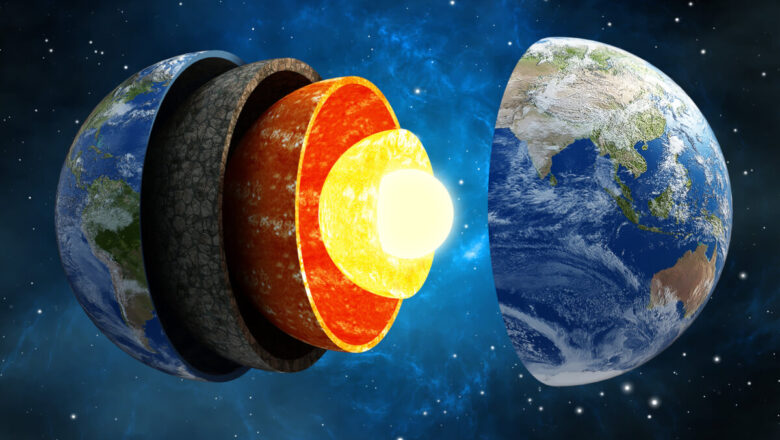
Deep below Earth’s surface, at a staggering depth of over 5,100 km, lies the inner core a solid ball of iron and nickel. Despite its size and influence, this mysterious part of Earth still puzzles scientists. While we know it plays a crucial role in shaping the conditions necessary for life on Earth, how and when the inner core formed remains a topic of ongoing debate. The Earth’s inner core is responsible for generating the planet’s magnetic field, which shields us from harmful solar radiation. This magnetic field is likely key to creating the conditions that allowed life to flourish billions of years ago. Without it, our planet may not have been able to sustain life. Interestingly, the inner core wasn’t always solid. As Earth has cooled over time, the once-liquid core has been grad...
Climate Crisis Linked to Surge in Intimate Partner Violence in Sub-Saharan Africa: UN Report

Climate Crisis Linked to Surge in Intimate Partner Violence in Sub-Saharan Africa: UN Report

Breaking News, Climate Actions, Environment
A recent report from the UN's sexual and reproductive health agency, UNFPA, highlights a deeply troubling connection between climate change and intimate partner violence in sub-Saharan Africa. The findings suggest that tens of millions of women and girls in the region will face catastrophic levels of violence if the world fails to curb rising global temperatures. According to projections, the number of individuals experiencing intimate partner violence could nearly triple by 2060, reaching 140 million in the worst-case scenario of unchecked emissions and stalled socioeconomic development. The report, Climate Change Impacts and Intimate Partner Violence in Sub-Saharan Africa, was produced by UNFPA in collaboration with the International Institute for Applied Systems Analysis (IIASA) and ...
Global Freshwater Crisis: UN Reports Highlight Severe Degradation in 90 Countries

Global Freshwater Crisis: UN Reports Highlight Severe Degradation in 90 Countries

Breaking News, Climate Actions, Environment
A series of alarming reports from UN-Water and the UN Environment Programme (UNEP) have revealed that 90 countries, primarily in Africa, Central Asia, and Southeast Asia, are facing significant degradation of their freshwater ecosystems. This widespread decline is marked by reduced river flow, shrinking lakes, increasing pollution, and poor water management, posing serious threats to food security, climate change, and biodiversity. The comprehensive triennial reports draw on the largest data sets ever compiled and highlight a stark contrast between high political commitment and the lack of financial and practical action needed to address the crisis. Despite recent global resolutions on sustainable water management, the reports emphasize the urgent need for enhanced global efforts to mee...
Pacific Island Nations Address climate exchange and confronting existential danger of weather exchange

Pacific Island Nations Address climate exchange and confronting existential danger of weather exchange

Breaking News, Environment
Vunidogoloa holds the unenviable name because the first network within the Pacific was forced to relocate due to climate trade. Situated on Vanua Levu, Fiji’s 2d-biggest island, Vunidogoloa has been struggling with rising sea stages for years. The once-thriving village located itself an increasing number of flooded by high tides, with saltwater seeping into farmland and drinking water resources. Faced with the choice between watching their domestic vanish or beginning a new, the villagers took a formidable step. In 2014, with authorities aid, they relocated 2 kilometre inland to the better floor. The pass changed into not just about saving houses; it was approximately preserving a way of lifestyles. The new village web page, with its modern-day services and stepped forward infrastruc...