Tuesday, September 22News That Matters

Month: August 2026

Eurasian lynx photographed at 17,400 feet in Sikkim

Eurasian lynx photographed at 17,400 feet in Sikkim

Breaking News
  A camera trap has captured a Eurasian lynx at around 17,400 feet (5,300 metres) on the Tso Lhamo plateau in Sikkim, providing the first confirmed photographic evidence of the elusive wild cat in the state high altitude wilderness. The sighting is significant because the Tso Lhamo plateau forms a natural transition between Central Asian and Eastern Himalayan ecosystems. Although the landscape appears barren, the area supports a surprisingly diverse wildlife community. Camera trap monitoring has also recorded snow leopards and Pallas’s cats along with Tibetan wolves and Tibetan sand foxes. Their prey includes Tibetan gazelles, Tibetan argali and southern kiang, suggesting that the plateau supports a functioning high-altitude food web. The lynx photograph came from a long t...
DDA Approves Land use Change for MCD 800 Tonne Per Day Waste Processing Facility in Ghazipur

DDA Approves Land use Change for MCD 800 Tonne Per Day Waste Processing Facility in Ghazipur

Breaking News
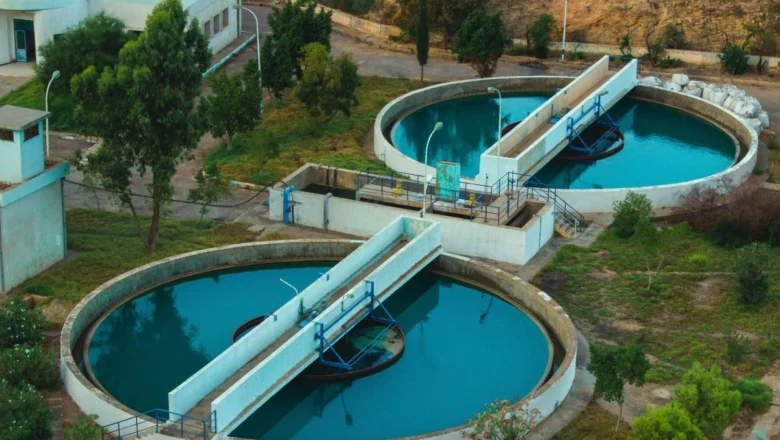
  The Delhi Development Authority (DDA) has approved a change in land use of a 10 acre plot in Ghazipur paving the way for a fresh waste processing facility with a capacity of at least 800 tonnes per day. The project will also include a biogas plant aimed at reducing the flow of newly generated municipal waste to Delhi’s major landfill sites. The land secured by the Municipal Corporation of Delhi (MCD) near the Integrated Freight Complex at Ghazipur, will be used to process fresh municipal waste. Five acres have been earmarked for the waste processing facility, while the remaining five acres will accommodate the biogas plant. The DDA approved changing the land-use category from “Commercial (Freight Complex)” to “Utility” for the project. Officials said the facility is expecte...
Atacama Desert Turns into a Massive Textile Waste Dump as 60,000 Tonnes of Used Clothing Enter Chile Each Year

Atacama Desert Turns into a Massive Textile Waste Dump as 60,000 Tonnes of Used Clothing Enter Chile Each Year

Breaking News
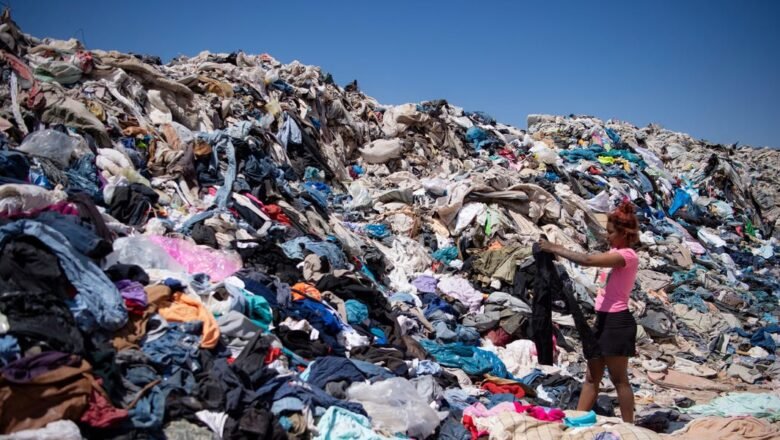
  A huge mountain of discarded clothing is accumulating in Chile’s Atacama Desert, one of the driest places on Earth, highlighting the growing environmental impact of the global fast-fashion and second-hand clothing trade. Chile receives around 60,000 tonnes of used clothing every year, much of it entering through the free trade zone of Iquique. While a portion of the garments is sorted and resold, clothing that fails to find buyers can end up abandoned or dumped in landfills near Alto Hospicio in the Tarapacá Region. Satellite images have captured the scale of the textile waste, with enormous piles of clothes, shoes and other garments covering parts of the desert landscape. Why is so much clothing ending up in the Atacama? The port and free trade zone of Iquique have b...
Ancient Sahara Lake was Larger Than all Five Great Lakes Combined

Ancient Sahara Lake was Larger Than all Five Great Lakes Combined

Breaking News
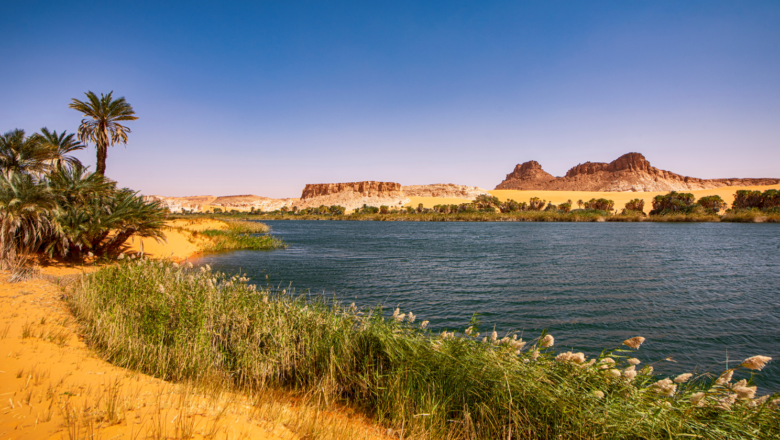
  Around 6,000 years ago the Sahara Desert looked dramatically different. A vast body of water known as Mega Chad covered roughly 360,000 square kilometres in what is now southern Sahara larger than all five North American Great Lakes combined. The ancient lake existed during Africa’s Humid Period, when much of North Africa was significantly wetter and greener than today. Changes in Earth’s orbit increased summer sunlight over the northern tropics, strengthening the African monsoon and bringing rainfall deep into the Sahara. As orbital conditions changed, rainfall weakened and the giant lake gradually shrank. Researchers have reconstructed its former size using ancient shorelines and lake sediments, with estimates of its peak area ranging from about 360,000 to more than 400,0...
Atolls Can Take 30 Million Years to Form and are Home to Around 1 Million People

Atolls Can Take 30 Million Years to Form and are Home to Around 1 Million People

Breaking News
Atolls are among the world most unusual and fragile landforms developing over millions of years from volcanic islands and coral reefs. These ring shaped islands surround lagoons and are mainly found in warm tropical and subtropical oceans. According to the traditional theory proposed by Charles Darwin in 1842 an atoll begins as an underwater volcano. As lava builds up, the volcano eventually rises above sea level and forms an island. Coral reefs then develop around the island. Over time, the volcanic island gradually erodes and sinks beneath the ocean. The surrounding coral continues growing toward the surface, eventually leaving behind a ring shaped reef enclosing a lagoon. This process can take between 1 million and 30 million years. Scientists have also proposed an alternative ...
Netherlands Transforms 37.2 Million Tonnes of Lakebed Sediment into Wildlife Islands

Netherlands Transforms 37.2 Million Tonnes of Lakebed Sediment into Wildlife Islands

Breaking News
The Netherlands has turned 37.2 million tonnes of dredged lakebed sediment into a chain of artificial islands designed to restore wildlife habitats and improve the ecosystem of Markermeer lake. Since 2016, engineers and conservationists have used sand, clay, silt and peat removed from the lakebed to create Marker Wadden, an archipelago of seven artificial islands and surrounding underwater habitats covering about 1,300 hectares. The project aims to address ecological problems that developed in Markermeer after decades of water engineering. The lake was separated from the former Zuiderzee through the construction of dams, creating a freshwater basin with limited natural connections between land and water. Over time, large quantities of fine sediment accumulated on the lakebed. Stro...
Monsoon Begins to Retreat as India Rainfall Deficit Reaches 13%

Monsoon Begins to Retreat as India Rainfall Deficit Reaches 13%

Breaking News
  The southwest monsoon is showing early signs of retreat, with dry winds beginning to enter parts of northwest India. According to the India Meteorological Department (IMD), India’s cumulative rainfall since June 4 remains 13% below normal. Rainfall has been uneven across the country. While parts of western and central India have recorded near normal rainfall, several areas of the Indo Gangetic plains, Northeast and southern peninsular India continue to face deficits. With the monsoon season entering its later phase the chances of reducing the overall rainfall gap are becoming increasingly dependent on the development of fresh weather systems over the Bay of Bengal.  
Rapid Global Warming Could Trigger Atlantic Circulation Collapse at lower Temperatures Study Finds

Rapid Global Warming Could Trigger Atlantic Circulation Collapse at lower Temperatures Study Finds

Breaking News
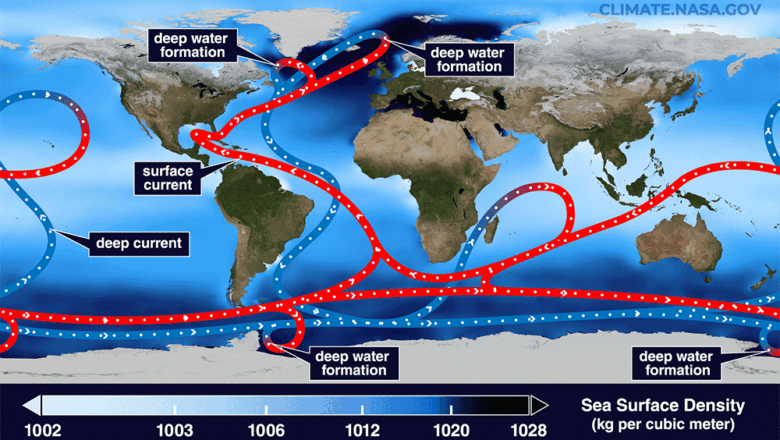
The Atlantic Meridional Overturning Circulation (AMOC), a major system of ocean currents that transports heat northward through the Atlantic, may be more sensitive to the rate of global warming than to the eventual temperature reached, a new study has found. Researchers from Utrecht University reported that the AMOC could remain stable under substantially higher levels of warming if the temperature rise occurs slowly. However, rapid warming at rates comparable to those occurring today could push the circulation towards a tipping point at much lower levels of global warming. The findings, published in Nature Climate Change, challenge the idea that the AMOC has a single, fixed temperature threshold beyond which it will inevitably collapse. The AMOC acts as a large scale climate regula...
Green Roofs can Cool Cities but Nearly Half may Fail without Long Term Maintenance

Green Roofs can Cool Cities but Nearly Half may Fail without Long Term Maintenance

Breaking News
As extreme summer heat continues to affect cities across the United States and Europe, green roofs are being promoted as a way to cool buildings and make urban areas more resilient. However, new research suggests that simply installing a green roof is not enough to guarantee long term benefits. Researchers studied 46 green roofs across the southeastern United States to examine how well they continued functioning years after installation. Nearly half were no longer operating as intended. Nine had been abandoned, while 12 had been completely removed. Green roofs are designed with layers of waterproofing, drainage and growing material that allow vegetation to grow on top of buildings. Plants can absorb sunlight, cool the surrounding air through evapotranspiration and provide additional ...
Solar Panel Waste Could Reach 402 Million Tonnes by 2060 Recycling may Unlock $1 Trillion Value

Solar Panel Waste Could Reach 402 Million Tonnes by 2060 Recycling may Unlock $1 Trillion Value

Breaking News
  The rapid expansion of solar power could create a massive waste challenge in the coming decades, with global photovoltaic (PV) panel waste projected to reach between 297 million and 402 million tonnes by 2060. Researchers, however say recycling the retired panels could turn this growing waste stream into an economic opportunity worth nearly $1 trillion. A study published in the journal Nature examined how countries could manage the expected surge in discarded solar panels while recovering valuable materials and reducing environmental impacts. Most solar panels have an operational life of around 25 to 30 years. As installations expanded rapidly over the past two decades, growing numbers of panels are now approaching the end of their useful lives. The study estimates that ...