Monday, September 21News That Matters

Month: August 2026

Forces Deep Inside Earth Helped Antarctica Freeze Millions of Years before the Arctic

Forces Deep Inside Earth Helped Antarctica Freeze Millions of Years before the Arctic

Breaking News
  New Delhi: Scientists have identified a possible geological explanation for why Antarctica became covered by a massive ice sheet millions of years before the Arctic with slow moving forces deep inside Earth helping raise East Antarctica high enough for permanent snow and ice to survive. The international study published in the journal Science, suggests that so called “mantle waves” gradually lifted large parts of East Antarctica over more than 100 million years. The rising landscape created high plateaus and mountain ranges where temperatures were cold enough for glaciers to form, even when the global climate was significantly warmer than it is today. Researchers said Antarctica began developing a major ice sheet around 34 million years ago while large ice sheets in the Nor...
Floating Wetlands Show Promise in Cutting Greenhouse Gas Emissions from Wastewater

Floating Wetlands Show Promise in Cutting Greenhouse Gas Emissions from Wastewater

Breaking News
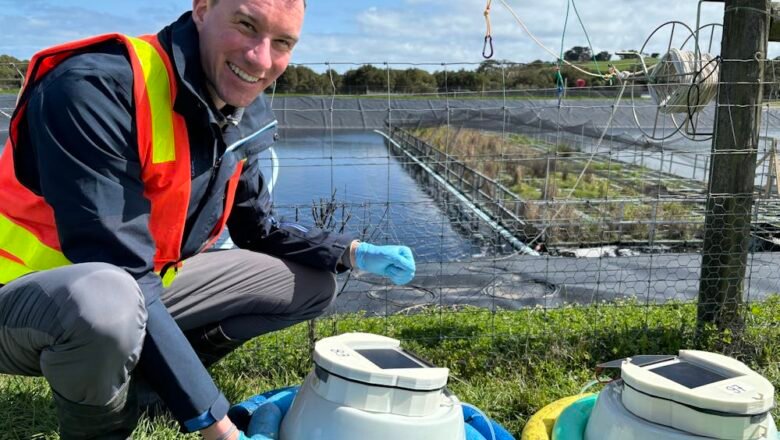
Victoria, Australia, August 26, 2026: A new study has found that floating wetlands planted on wastewater lagoons could significantly reduce greenhouse gas emissions, offering a simple nature based solution to one of the hidden climate challenges of sewage treatment. Researchers conducted what they describe as the first full scale trial of its kind at an operating wastewater lagoon on Phillip Island, Victoria. Over two years, floating wetland reduced overall greenhouse gas emissions by between 22% and 31% compared with a similar untreated channel. Wastewater treatment helps clean polluted water, but the process can also generate significant amounts of carbon dioxide, methane and nitrous oxide as microorganisms break down sewage and nutrients. Methane and nitrous oxide are particularly...
Singapore Trees Cool Streets, Cut Air Conditioning Demand

Singapore Trees Cool Streets, Cut Air Conditioning Demand

Breaking News
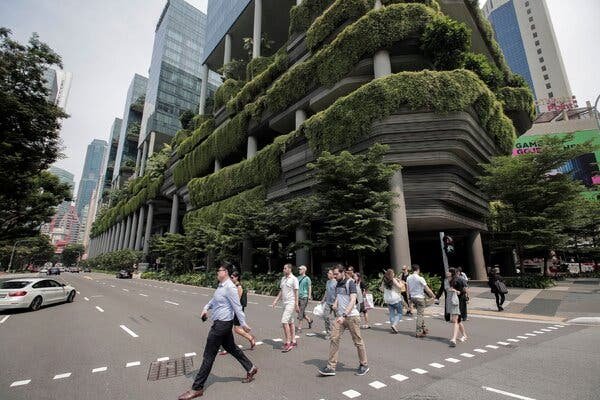
  Singapore, August 26, 2026: Singapore's decades-long effort to plant and preserve millions of trees is delivering measurable benefits with new research showing that urban greenery can cool streets, reduce heat stress and lower the demand for air conditioning in one of Asia's hottest and most densely built cities. A study conducted in Singapore's one north district found that street shade reduced average air temperatures by around 0.8°C across 20 paired sunlit and shaded locations. The impact on human heat stress was even greater. Using the Universal Thermal Climate Index, which considers temperature, humidity, wind and radiant heat, researchers found that shade reduced perceived heat stress by an average of 3.1°C and prevented around 92% of extreme heat stress that would ot...
Peatland Restoration Cuts Wildfire Risk in Indonesia’s Tropical Forests

Peatland Restoration Cuts Wildfire Risk in Indonesia’s Tropical Forests

Breaking News
  Restoring degraded peatlands in Indonesia has significantly reduced wildfire risk, offering a potential strategy for protecting forests and communities as climate change and El Nino driven droughts intensify. Indonesia’s peatlands are particularly vulnerable to fires because drainage, deforestation and land conversion can leave the normally waterlogged ecosystems dry and highly flammable. Major fires occurred during recent El Niño years, including 2015, 2019 and 2023. The 2015 fires were especially severe, burning around 2.6 million hectares of land and sending smoke across Southeast Asia. Economic losses were estimated at more than US$16.1 billion, while the fires also caused significant environmental and health impacts. Restoration Reduced Fire Hotspots by Up to 22% ...
Uttarakhand Disaster Aid for Damaged Houses: Who Is Eligible and How to Apply

Uttarakhand Disaster Aid for Damaged Houses: Who Is Eligible and How to Apply

Breaking News
  The Uttarakhand State Disaster Management Authority provides financial assistance to residents whose homes are partially or completely damaged by natural disasters. The scheme covers affected houses in both plain and hilly areas, with the amount depending on the extent of damage type of house and location. Assistance Ranges From Rs 4,000 to Rs 1.30 Lakh For a pucca or kutcha house that has been severely damaged or completely destroyed, eligible residents can receive Rs 1.20 lakh per house in plain areas. In hilly areas, including districts covered under the Integrated Action Plan, the assistance is Rs 1.30 lakh. For houses suffering at least 15% damage, the assistance is set at Rs 6,500 for a pucca house other than a hut and Rs 4,000 for a kutcha house other than a hut. ...
After Three Decades Lotus Blooms Again in Wular Lake Bringing Hope for Ecology and Livelihoods

After Three Decades Lotus Blooms Again in Wular Lake Bringing Hope for Ecology and Livelihoods

Breaking News
  Srinagar, August 25, 2026 — Lotus flowers have reappeared in Wular Lake after being largely absent for nearly three decades, raising hopes of ecological recovery and renewed livelihood opportunities for communities living around the Kashmir wetland. For local fishermen and residents, the return of the lotus is more than a seasonal sight. The lake once supported families through fishing, harvesting lotus stems, locally known as nadru, and collecting water chestnuts. According to the Wular Conservation and Management Authority (WUCMA), lotus growth was observed again last year and has continued this year. However, heavy rains and flooding in recent weeks have damaged some of the emerging vegetation. Officials said lotus plants grow in shallow waters and are vulnerable to risi...
‘Sweating’ Cement Based Paint Keeps Model House More Than 4.5°C Cooler

‘Sweating’ Cement Based Paint Keeps Model House More Than 4.5°C Cooler

Breaking News
  Researchers at Singapore Nanyang Technological University (NTU) have developed a cement based cooling paint that mimics the way human skin cools through sweating. In experiments, a model house coated with the paint remained more than 4.5°C cooler than one covered with conventional white paint. The paint known as CCP-30 is designed to work through three cooling mechanisms reflecting sunlight, releasing heat as infrared radiation and evaporating stored water. The research was published in the journal Science in June. Unlike conventional reflective paints, which mainly rely on bouncing sunlight away, CCP-30 uses moisture to remove additional heat. Its porous structure contains calcium silicate hydrate, a cement like material that can absorb and hold water. As the trapped moist...
Florida Lake Cuts Invasive Hydrilla From 95% to Less Than 1% Using Grass Carp

Florida Lake Cuts Invasive Hydrilla From 95% to Less Than 1% Using Grass Carp

Breaking News
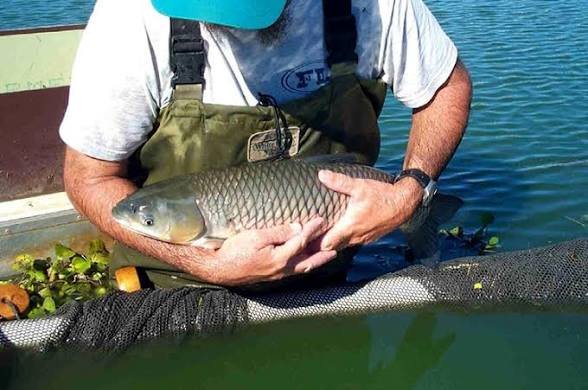
  Lake Baldwin in Florida’s Orlando area has become a notable example of using fish to control an invasive aquatic weed. Wildlife managers introduced grass carp after hydrilla had spread across about 95% of the lake, reducing its coverage to less than 1%. According to the documented case study, the treatment cost about $8,499, or roughly $43 per acre. Grass carp a plant eating fish native to parts of Asia have been used in more than 70 public lakes across Florida to control hydrilla. Hydrilla is not native to Florida and spread through waterways after entering the aquarium trade. The fast growing weed can form dense mats near the water surface, restricting boat traffic, interfering with swimming and fishing, and competing with native aquatic plants. Florida managers began ...
Oregon Treated Diamond Lake With Rotenone After Invasive Fish Caused Trout Fishery Collapse

Oregon Treated Diamond Lake With Rotenone After Invasive Fish Caused Trout Fishery Collapse

Breaking News
  In September 2006 Oregon officials carried out a large scale treatment of Diamond Lake after an invasive fish species caused the lake’s trout fishery to collapse and contributed to recurring water quality problems. The invasive fish, tui chub, is a minnow that is not native to Diamond Lake and was believed to have been illegally introduced as live bait. By 2006, officials estimated the population had reached about 90 million young fish and 8 million adults. The chub competed with rainbow trout for food and consumed large quantities of zooplankton, disrupting the lake’s food web. Their presence also contributed to conditions that encouraged harmful algae blooms, leading to repeated water-contact advisories during the early 2000s. Diamond Lake had been a popular trout fish...
Queensland $741 Million Housing Programme Improves Flood Resilience

Queensland $741 Million Housing Programme Improves Flood Resilience

Breaking News
  An independent evaluation has found that Queensland’s $741 million Resilient Homes Fund helped thousands of homeowners strengthen their homes against future floods following the devastating 2021–22 Southern Queensland floods. The programme offered three voluntary options: home buy backs, raising homes and resilient retrofits. As of December 8, 2025, it had received 6,558 registrations of interest, with 685 home buy back contracts settled, 341 home raising grants completed and 805 resilient retrofit grants completed. The evaluation found that the programme helped homeowners better understand flood risks, implement resilience measures and recover from disasters. Many participants also reported greater confidence in their homes’ ability to withstand future flooding. Researc...