Tuesday, September 22News That Matters

Breaking News

Antarctic Sea Ice Shows Partial Recovery in 2026 After Four Years of Record Lows

Antarctic Sea Ice Shows Partial Recovery in 2026 After Four Years of Record Lows

Breaking News
    Scientists say Antarctic sea ice has shown a modest recovery in 2026, reaching levels closer to its long-term seasonal average after several years of unusually low coverage. Although the improvement offers a small sign of stabilization, researchers caution that the ice extent still remains below historical averages and does not indicate a full reversal of recent changes. According to scientists at the National Snow and Ice Data Center at University of Colorado Boulder, Antarctic sea ice likely reached its lowest point for the year on February 26, covering about 2.58 million square kilometers. Every year during the Southern Hemisphere’s summer, sea ice shrinks to its annual minimum before beginning to expand again during the colder months. This minimum measurement is ...
Scientists Solve Global Climate Puzzle: Why the Planet Does Not Experience Drought Everywhere at the Same Time

Scientists Solve Global Climate Puzzle: Why the Planet Does Not Experience Drought Everywhere at the Same Time

Breaking News
    A new scientific study has answered an important climate mystery: why the entire planet does not face drought simultaneously. Researchers have discovered that natural ocean cycles and shifting rainfall patterns prevent a synchronized, worldwide drought that could otherwise threaten global agriculture and food supplies. The research was conducted by scientists from the Indian Institute of Technology Gandhinagar in collaboration with the Helmholtz Centre for Environmental Research – UFZ in Germany. Published in the journal Communications Earth & Environment, the study analyzed more than a century of global climate records from 1901 to 2020 to understand how droughts develop and spread across the world. The findings show that although climate change is increasing...
United Nations Approves Global Framework to Improve Disaster-Related Statistics Worldwide

United Nations Approves Global Framework to Improve Disaster-Related Statistics Worldwide

Breaking News
    The United Nations has endorsed a major global framework aimed at strengthening how disaster-related data is collected, analysed and used across countries. The decision was taken during the 57th session of the United Nations Statistical Commission, marking the first time a comprehensive international system for disaster statistics has been formally adopted. The new framework, known as the Global Disaster-Related Statistics Framework (G-DRSF), seeks to improve the way countries measure disaster impacts, risks and investments in prevention. It will help governments develop more reliable and consistent data systems for tracking disasters and their consequences. Global System Aims to Improve Disaster Risk Data The framework has been developed with the support of th...
Rare Hatchling of Critically Endangered Painted River Terrapin Brings Hope for Conservation

Rare Hatchling of Critically Endangered Painted River Terrapin Brings Hope for Conservation

Breaking News
    Conservationists are celebrating an important breakthrough after a rare hatchling of the critically endangered Painted River Terrapin was discovered at the Smithsonian National Zoo & Conservation Biology Institute. The tiny turtle was found swimming in the terrapin exhibit in August 2025. According to zoo officials, the hatchling is healthy and growing well, offering hope for the survival of one of the world’s most threatened turtle species. The painted river terrapin, scientifically known as Batagur borneoensis, lives in river estuaries and mangrove habitats in Southeast Asia, including regions of Malaysia, Indonesia, Thailand, Borneo, and Sumatra. Unlike sea turtles, these terrapins cannot remove excess salt from their bodies, which means they must live in f...
Desert Locust Swarms Can Stretch Forty Miles Wide and Destroy Crops Across Continents

Desert Locust Swarms Can Stretch Forty Miles Wide and Destroy Crops Across Continents

Breaking News
    Across the deserts stretching from Africa to India, one of the most destructive natural phenomena appears when environmental conditions become favorable: the massive swarm of the Desert Locust. These swarms can grow to extraordinary sizes, sometimes stretching as wide as 40 miles and containing billions of insects that move together in search of food. When heavy rains fall in normally dry desert regions, vegetation begins to grow rapidly. This sudden growth creates the perfect breeding conditions for desert locusts. Eggs that have sometimes remained dormant in the soil for many years begin to hatch. The young locusts, known as hoppers, develop quickly as they feed on fresh plants. As the insects grow and food becomes scarce in one area, they begin migrating to new...
Study Finds Roadsides and Farms Can Support Native Bees in the Northwestern Himalayas

Study Finds Roadsides and Farms Can Support Native Bees in the Northwestern Himalayas

Breaking News
    A new study from the Himalayan foothills has revealed that roadside vegetation and farms can play an important role in supporting native bee populations. Researchers studying pollinators in the Jammu region found that these human-modified landscapes often attract a surprising variety of bee species, challenging the long-held belief that biodiversity is highest only in untouched natural habitats. The research was conducted by scientists from Sher-e-Kashmir University of Agricultural Sciences and Technology in Jammu. During field surveys carried out between 2022 and 2023, researchers recorded 1,087 individual bees belonging to 21 species. The study focused on native bees that are not part of the honeybee group, often referred to as non-Apis pollinators. Scientists i...
Heatwave Grips Western India as Temperatures Rise Sharply, Says India Meteorological Department

Heatwave Grips Western India as Temperatures Rise Sharply, Says India Meteorological Department

Breaking News
    Several parts of India are already experiencing unusually high temperatures as early heatwave conditions spread across western and northern regions of the country. According to the India Meteorological Department, many areas recorded significantly above-normal maximum temperatures on March 11, with some regions facing severe heatwave conditions. The most intense conditions were reported in parts of Gujarat, particularly in the Saurashtra and Kutch regions, where temperatures surged far above seasonal averages. Major cities including Ahmedabad and Gandhinagar recorded maximum temperatures that were 7.2 degrees Celsius and 6.4 degrees Celsius above normal respectively. Meteorologists said that heatwave to severe heatwave conditions have also affected isolated areas ...
Delhi Tulip Festival Wilted Within Days After Crores Spent on Imported Bulbs

Delhi Tulip Festival Wilted Within Days After Crores Spent on Imported Bulbs

Breaking News
    New Delhi: What was meant to be a vibrant spring attraction in the capital ended up disappointing many visitors this year as the flowers at the Delhi Tulip Festival dried up just days after blooming. Large sections of the famous tulip beds along Shanti Path were already bare by the time many Delhi residents arrived to see them. The festival, organised by the New Delhi Municipal Council, was officially inaugurated on 23 February and scheduled to run until 10 March. However, by early March most of the flowers had already wilted. Visitors who came expecting colourful rows of blooms instead found dried stems and empty patches of soil under the rising spring heat. The event had gained attention after Delhi Chief Minister Rekha Gupta encouraged residents to enjoy tulips...
Global Ocean Cleanup Effort Removes Record 45 Million Kilograms of Plastic from Seas and Rivers

Global Ocean Cleanup Effort Removes Record 45 Million Kilograms of Plastic from Seas and Rivers

Breaking News
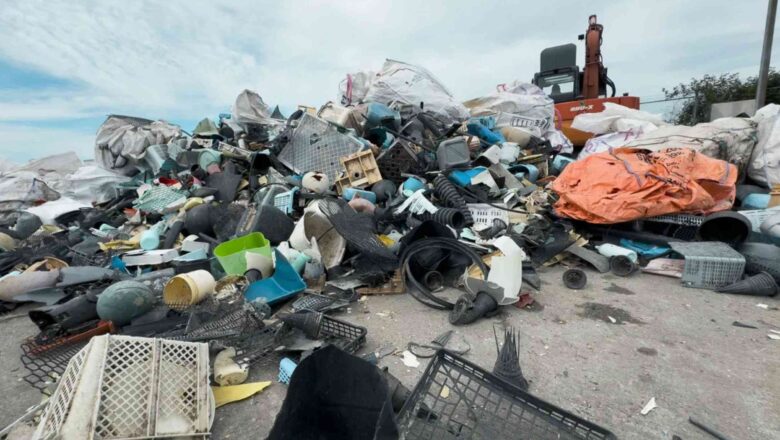
    A major international cleanup initiative has removed more than 45 million kilograms of plastic waste from oceans and rivers, marking the largest verified amount ever collected by a single global cleanup project. The milestone highlights the growing ability of large-scale engineering systems to remove plastic pollution while also underscoring the enormous amount of waste that continues to enter marine ecosystems every year. The achievement was reported by the environmental organization The Ocean Cleanup, which has been deploying advanced debris-capturing systems across rivers and open ocean areas. The effort has focused on locations where floating plastic naturally accumulates, including coastlines, rivers, and the massive garbage zone known as the Great Pacific Garba...
Microplastics Are Turning Farm Soil Into Microscopic Battlegrounds, Scientists Warn

Microplastics Are Turning Farm Soil Into Microscopic Battlegrounds, Scientists Warn

Breaking News
    Microplastics are widely known for polluting oceans and marine ecosystems, but scientists are now raising concerns about another growing environmental threat plastic contamination in agricultural soils. A new scientific review suggests that these tiny plastic fragments may be transforming farmland into microscopic battlegrounds where microbes and viruses compete, interact, and exchange genes. The research team, led by scientists from Jiangsu University, examined how microplastics affect soil ecosystems at the smallest biological scales. Their findings suggest that plastic particles do more than simply pollute the soil. They create new microscopic environments that can reshape microbial communities and potentially influence soil fertility and the long-term sustainabil...